



Table of Contents Show
Last researched: 26 October 2026
London is home to restaurants serving food from almost every part of Europe, but finding a genuinely Hungarian meal requires a little more research than finding Italian pizza or French pastries.
If you are searching for a Hungarian restaurant in London, the best choices depend on what you want to eat. A bowl of traditional goulash, a plate of chicken paprikash with dumplings, a freshly fried lángos and a warm chimney cake are very different dining experiences.
There are dedicated Hungarian restaurants in East London, places combining Hungarian and Romanian cooking in North London, and market traders specialising in Hungarian street food.
However, some older recommendations are no longer reliable. The Rosemary Organic Hungarian Restaurant in New Cross closed in July 2025, while Lakehouse in South Woodford introduced a restricted dine-in schedule for 2026.
This guide compares the restaurants and food traders worth considering, their locations, published prices, signature dishes and practical details. The recommendations are based on current menus, business information and published visitor feedback, rather than unverified claims of personal visits.
Best Hungarian Restaurants in London at a Glance
The first three are the most relevant choices for a traditional restaurant meal. The remaining businesses are better suited to desserts, casual snacks or market visits.
1. TrioBite Restaurant, Leyton – Best for Hungarian Comfort Food
Address: 625 High Road Leyton, London E10 6RF
Cuisine: Hungarian, Romanian and Transylvanian
Best for: Casual lunches, affordable main courses, traditional comfort food
Website: https://triobite.com/
Contact: 07917 409745
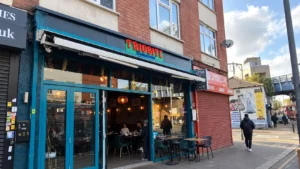 TrioBite is one of the most useful additions to a London Hungarian dining guide in 2026.
Located on High Road Leyton, close to Leyton Midland Road station, the restaurant brings together traditional Hungarian and Romanian recipes in a relatively informal setting.
Its menu is particularly relevant to people who want to try several recognisable Hungarian dishes without having to travel to different restaurants.
The food is built around paprika, slow-cooked meat, dumplings, fried dough and familiar Central European accompaniments.
Visitors looking for Hungarian home cooking rather than an elaborate fine-dining presentation should find the menu especially interesting.
What Should You Order at TrioBite?
The published menu includes several traditional dishes.
Prices were taken from TrioBite’s published menu during the October 2026 review and may change.
The chicken paprikash is a useful choice for someone ordering Hungarian cuisine for the first time. It combines familiar ingredients with the distinctive sweetness and depth of paprika.
For a more casual meal, lángos is worth considering. The fried bread has a crisp exterior and softer centre, while garlic, sour cream and cheese provide the traditional flavour combination.
A practical budget example: Ordering the £12.98 goulash and £6.48 sour cream and cheese lángos would cost £19.46 before drinks, service charges or menu changes.
That gives readers a more useful indication of value than simply describing the restaurant as inexpensive.
Important visiting information: TrioBite’s website displays an older Brunswick Gardens address, while contemporary restaurant listings identify 625 High Road Leyton. Confirm the Leyton location and opening hours directly before travelling.
Why choose TrioBite? It offers a substantial selection of traditional dishes, making it a sensible first stop for diners who want Hungarian food without waiting for a special dining weekend.
2. Lakehouse Hungarian Restaurant, South Woodford – Best for Traditional Hungarian Dining
Address: 83 High Road, South Woodford, London E18 2QP
Cuisine: Hungarian and Central European
Best for: Relaxed dinners, traditional recipes, family meals and private celebrations
Website: https://www.lakehouserestaurant.co.uk/
Contact: 07711 585380
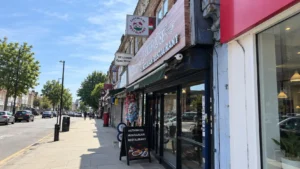 Lakehouse is a family-run Hungarian restaurant operated by siblings Mike and Bernadette in South Woodford.
Its appeal comes from traditional comfort food and a relatively intimate dining atmosphere.
The restaurant focuses on recipes familiar to Hungarian households, including paprika-based stews, savoury pancakes, fried meat dishes, dumplings and classic desserts.
Unlike many London restaurants where Hungarian-inspired dishes appear as occasional specials, Lakehouse gives these recipes a prominent place on its menu.
The restaurant’s location is also worth clarifying. Despite its name, Lakehouse is situated on High Road in South Woodford, not beside a lake.
What Is on the Lakehouse Menu in 2026?
The October 2026 menu provides useful evidence of both its traditional character and its prices.
The Hortobágyi pancake deserves special attention.
Unlike a sweet pancake served with jam or sugar, this traditional Hungarian dish contains a savoury meat filling and is finished with paprika sauce.
It provides an excellent introduction to the relationship between Hungarian home cooking and the country’s broader culinary traditions.
Lakehouse’s goulash soup is another interesting option because it illustrates the difference between traditional Hungarian gulyás and the thicker beef stews often described as goulash in British restaurants.
A useful ordering idea: Try goulash soup as a starter and chicken paprikash as a main course. At the listed prices, this combination costs £25.89 before drinks and additional charges.
Lakehouse’s Important 2026 Opening-Hours Change
Lakehouse introduced a different operating model in 2026.
According to the owners, regular dine-in service is concentrated on the first and last weekends of each month.
The business also offers prepared meals for home consumption, selected event-style openings and private venue hire.
Its weekly meal service is particularly interesting for local residents who enjoy Hungarian food but cannot attend the restaurant’s scheduled dine-in weekends.
For visitors travelling across London, the limited opening schedule is essential information.
Do not assume that the restaurant is open every Saturday or Sunday simply because a dining directory displays conventional weekend opening hours.
Why choose Lakehouse? Its extensive traditional menu makes it especially attractive for diners interested in the wider range of Hungarian cuisine, provided they plan around its actual opening dates.
3. Brasserie Transylvania, Green Lanes – Best for Hungarian and Romanian Flavours
Address: 353 Green Lanes, London N4 1DZ
Cuisine: Hungarian, Romanian and Transylvanian
Best for: Hearty lunches, casual dinners, mixed Central European dishes
Contact: 020 8802 0866
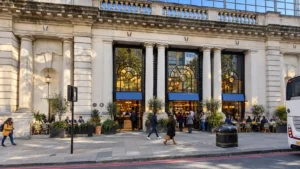 Brasserie Transylvania, also known as Erdélyi Étterem, offers a slightly different perspective on Hungarian cuisine in London.
The restaurant serves food influenced by the culinary traditions of Transylvania, a region in present-day Romania with significant Hungarian cultural and historical connections.
This regional identity matters because Hungarian and Romanian food share several ingredients and cooking techniques without being identical cuisines.
Meat stews, cabbage dishes, paprika sauces and dumplings appear across the region, often with variations shaped by local family traditions.
The restaurant is located on Green Lanes, an area with a strong reputation for independent restaurants serving food from different communities.
Visitors exploring the wider area can also read our guide to the best restaurants in North London.
What Hungarian Dishes Can You Try?
Its published delivery menu includes:
- Chicken paprikash, listed at £15.95.
- Chicken schnitzel, listed at £15.95.
- Bean goulash, listed at £15.95.
These are delivery-platform prices and should not be treated as confirmed dine-in prices.
Chicken paprikash is a particularly relevant dish for someone comparing Brasserie Transylvania with Lakehouse or TrioBite.
The three establishments approach Hungarian and Hungarian-influenced home cooking from somewhat different perspectives.
At Brasserie Transylvania, the regional crossover is part of the attraction.
For visitors unfamiliar with Transylvanian cooking, it is worth asking which dishes are specifically Hungarian, which are Romanian, and which reflect the region’s shared traditions.
That conversation may be more illuminating than simply ordering whichever dish has the most familiar name.
Why choose Brasserie Transylvania? It is a practical choice for people who want a casual restaurant meal in North London while exploring both Hungarian and Romanian flavours.
4. Chimney Cake Lady, Camden – Best for Hungarian Chimney Cake
Location: Waterside Halls, Camden Market Hawley Wharf, London NW1 8QH
Speciality: Kürtőskalács, or chimney cake
Best for: Desserts, market visits, sweet treats and casual snacks
Official listing: https://camdenmarket.com/food-drink/chimney-cake-lady
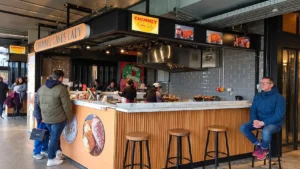 Not every memorable Hungarian food experience in London needs to involve a restaurant table.
Chimney Cake Lady at Camden Market offers a way to try one of the country’s best-known sweet specialities.
Kürtőskalács, commonly called chimney cake in English, is made by wrapping strips of sweet dough around a cylindrical baking tool.
As the dough cooks, its sugared exterior caramelises, producing a golden crust while the inside remains soft.
The finished pastry is hollow, which gives it its distinctive chimney-like shape.
It is traditionally associated with Transylvania and the Hungarian-speaking communities of that region.
Camden Market’s official listing describes sweet toppings such as cinnamon sugar alongside more contemporary filled and savoury variations.
For someone who has never eaten chimney cake, the simplest cinnamon-sugar version is a useful starting point because the pastry itself remains the focus.
Camden’s lively market setting also makes this an appealing stop for visitors who prefer discovering new food while exploring London.
For more casual eating ideas, explore our guide to street food in London.
Why choose Chimney Cake Lady? It is better suited to a dessert stop than a full Hungarian dinner, especially for people already visiting Camden.
5. Chimney Cake Paradise, Greenwich – Best for Lángos and Freshly Baked Treats
Location: Greenwich Market, Greenwich, London SE10 9HZ
Specialities: Hungarian chimney cake and lángos
Best for: Weekend market visits and Hungarian street food
Official trader page: https://greenwichmarket.london/guide/detail/chimney-cake-paradise-ltd/
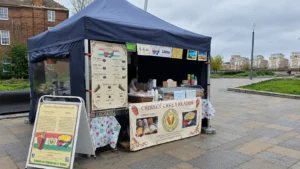 Chimney Cake Paradise provides another opportunity to experience Hungarian food outside the traditional restaurant environment.
The business was established in 2016 and specialises in freshly prepared chimney cakes and lángos.
It operates at markets, festivals and pop-up events, with a confirmed listing at Greenwich Market.
Its combination of sweet and savoury food makes it particularly interesting for someone who wants to experience more than one Hungarian street-food tradition.
Lángos is a deep-fried flatbread, commonly served with garlic, sour cream and grated cheese.
Chimney cake, by contrast, is a sweet baked pastry traditionally coated in sugar.
Although both involve dough, their flavours, cooking methods and places in Hungarian food culture are quite different.
Greenwich Market currently lists Chimney Cake Paradise on Fridays, Saturdays and Sundays, with published trading hours extending through the daytime.
The exact stall schedule should still be confirmed before a special journey.
One advantage of visiting Greenwich is that the food stop can form part of a larger day exploring the historic town centre, its riverside attractions and independent market businesses.
If food markets are a particular interest, London Local News also has a guide to the best food markets in London.
Why choose Chimney Cake Paradise? It offers a convenient way to combine Hungarian snacks with a Greenwich market visit, rather than planning a separate restaurant booking.
6. Louis Patisserie, Hampstead – Best for Traditional Central European Café Culture
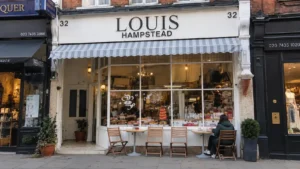 Address: 32 Heath Street, Hampstead, London NW3 6TE
Type: Café and patisserie
Best for: Coffee, cakes and an old-fashioned café experience
Website: https://louis-patisserie.com/
Contact: 020 7435 9908
Louis Patisserie deserves mention in a guide to Hungarian food in London because of its longstanding connection with Hungarian baking traditions.
The café was founded in 1963 by Louis Permayer, a Hungarian pastry chef, and became part of Hampstead’s Central European café culture.
Rather than specialising in goulash or substantial Hungarian dinners, it is historically associated with cakes, pastries and coffee.
Traditional Austro-Hungarian desserts include Dobos torte, a layered sponge and chocolate buttercream cake, and Esterházy-style cakes featuring nuts and rich fillings.
The café’s current selection may differ from its historical specialities, so visitors seeking a particular cake should confirm availability.
Its appeal is therefore different from Lakehouse or TrioBite.
A visit to Louis Patisserie is more about the tradition of lingering over coffee and cake in a neighbourhood café than experiencing a complete Hungarian dinner.
This distinction is important for searchers looking specifically for Hungarian restaurants. Louis is a relevant cultural and dessert alternative, but it should not be presented as a direct substitute for a dedicated Hungarian dining room.
Why choose Louis Patisserie? Consider it when exploring Hampstead and looking for a café with a historical connection to Hungarian and Central European baking.
7. Lángos Boys – Best for Hungarian Street Food at Events
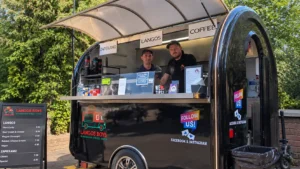 Location: Mobile trader at London markets, festivals and private events
Cuisine: Hungarian and Polish street food
Best for: Fresh lángos, informal eating and event catering
Website: https://langosboys.com/
Lángos Boys is different from the restaurants in this guide because it operates as a mobile food business rather than a permanent walk-in restaurant.
The team describes itself as a Polish and Hungarian partnership, combining traditional Central European street-food specialities.
Its menu places particular emphasis on lángos, but also includes Polish zapiekanki, Hungarian sausages and chimney cake.
Published examples include:
The plain garlic lángos is one of the simplest ways to experience the food without heavy toppings.
The Magyar version is better suited to someone seeking a more substantial snack.
Lángos Boys also participates in markets and events, so readers should consult its official schedule rather than travelling to an address found on an old delivery listing.
Why choose Lángos Boys? Its clearly published street-food menu makes it useful for understanding the types of lángos available in London and their approximate cost.
Which Hungarian Restaurant in London Should You Choose?
The best option changes depending on the day, the dish and the type of experience you want.
For a traditional restaurant meal with several recognisable Hungarian main courses, TrioBite is a useful starting point.
For a more focused Hungarian dining occasion, Lakehouse offers a strong traditional menu but requires careful planning around its limited weekend service.
Brasserie Transylvania is worth considering for a combination of Hungarian and Romanian food, especially when dining around Green Lanes.
If dessert is the priority, Chimney Cake Lady in Camden and Chimney Cake Paradise in Greenwich are more relevant than the full-service restaurants.
Louis Patisserie provides a different experience again, centred on Central European café heritage rather than savoury Hungarian specialities.
This variety also demonstrates why a list of London’s best Hungarian eateries should not treat every establishment as interchangeable.
Someone looking for a quick £5 lángos has different needs from a visitor hoping to book a relaxed two-course Hungarian dinner.
For more independent dining inspiration across the capital, see our feature on hidden restaurants in London.
What Traditional Hungarian Food Should You Try First?
Hungarian cuisine is strongly associated with paprika, but it would be misleading to describe every Hungarian dish as particularly spicy.
Sweet paprika often brings colour, aroma and richness without intense chilli heat.
On a first visit, it helps to understand the difference between the country’s best-known dishes.
Goulash and Pörkölt Are Not the Same Dish
One of the most common misunderstandings about Hungarian food concerns goulash.
In Hungary, gulyás is traditionally a soup-like dish, often containing beef, potatoes, vegetables and paprika.
Pörkölt is a thicker stew, generally featuring meat cooked with onions and paprika in a concentrated sauce.
Outside Hungary, the name goulash is frequently used for thick stews that resemble pörkölt more closely than traditional gulyás.
Understanding this difference helps explain why different London restaurants may serve dishes labelled goulash with noticeably different consistencies.
Why Chicken Paprikash Is an Excellent First Order
Chicken paprikash is one of the most approachable Hungarian dishes for diners unfamiliar with the cuisine.
Chicken is cooked in a sauce built around onions and paprika, often finished with sour cream.
It is commonly served with nokedli, which helps absorb the sauce.
The result is rich and comforting rather than necessarily fiery.
Both TrioBite and Lakehouse publish chicken paprikash on their menus, making the dish a useful point of comparison between the two restaurants.
What Makes Hungarian Desserts Different?
Hungarian baking traditions reflect centuries of Central European cultural exchange.
Layered cakes, walnuts, chestnuts, chocolate, fruit preserves and delicate pastries frequently appear in traditional desserts.
Kürtőskalács is especially associated with festivals and street food, while cakes such as Dobos torte belong more naturally to patisserie and café culture.
Visitors should also remember that a dessert with Hungarian historical roots may appear in a bakery that no longer specialises exclusively in Hungarian recipes.
How Much Does Hungarian Food Cost in London in 2026?
The cost of Hungarian food varies depending on whether you are buying a street-food snack or sitting down for a complete restaurant meal.
Examples from the published menus reviewed for this guide demonstrate the difference.
At Lángos Boys, basic lángos starts at £5.
At TrioBite, Hungarian goulash is listed at £12.98 and chicken paprikash at £13.88.
At Lakehouse, the published goulash soup costs £9.90, while chicken paprikash is £15.99.
A complete restaurant meal will naturally cost more once drinks, starters, desserts and any service charges are included.
These examples are not a citywide average or a guarantee of current prices. They are specific published menu prices checked for this article.
For diners trying Hungarian cuisine on a smaller budget, ordering a single traditional main course or visiting a street-food trader may be more practical than choosing a multi-course dinner.
Is Hungarian Food Vegetarian or Vegan Friendly?
Traditional Hungarian cuisine contains many meat-based dishes, but vegetarian choices are possible.
Mushroom paprikash, vegetable stews, fried potatoes and some styles of lángos can provide alternatives.
Lakehouse lists a vegetarian mushroom paprikash, while TrioBite publishes a wild mushroom stew and a Hungarian-style vegetable dish.
However, vegetarian does not automatically mean vegan.
Sour cream, cheese, butter and eggs feature prominently in Hungarian cooking.
Lángos dough and toppings may also contain milk or other animal-derived ingredients.
For vegan diners, it is worth checking the entire preparation rather than requesting that cheese be removed from an otherwise unsuitable dish.
People with food allergies should be especially careful with dumplings, pancakes, fried bread and desserts, which may contain gluten, eggs, milk or nuts.
Restaurants are required to provide information about regulated allergens. Always check directly with the venue, particularly where recipes or kitchen preparation methods may change.
Where Can You Find Hungarian Food in London on a Weekday?
Weekday dining requires some additional planning.
Lakehouse is not an ideal spontaneous weekday destination because its regular dine-in service is concentrated on selected weekends.
Brasserie Transylvania advertises regular weekday restaurant service through current dining listings, making it a potential weekday option.
TrioBite also lists weekday service, although its published opening hours vary between platforms.
Louis Patisserie operates as a daytime café rather than a conventional evening restaurant.
Market traders may be present only on particular days, while mobile vendors can change locations from one event to another.
For that reason, the most useful question is not simply whether a business exists, but whether its particular type of service is available when you plan to visit.
Restaurant websites, current booking information and direct telephone confirmation are more reliable than assuming old directory hours remain correct.
Is The Rosemary Organic Hungarian Restaurant Still Open?
No. The Rosemary Organic Hungarian Restaurant at 178 New Cross Road closed in July 2025.
The restaurant was formerly one of London’s better-known Hungarian dining establishments, recognised for organic ingredients, Hungarian-inspired dishes and a distinctive local atmosphere.
Its previous inclusion in restaurant guides is understandable because it played a meaningful role in London’s Hungarian dining scene.
However, it would be misleading to recommend it as an operating restaurant in 2026.
In a July 2026 anniversary message, the former owners confirmed that The Rosemary had closed a year earlier and thanked guests, staff and supporters for their involvement over the years.
The owners’ subsequent work has included ceramics and other creative projects.
This matters because some restaurant directories continue to display historical opening hours and descriptions even after a business has closed.
Visitors searching for The Rosemary today should therefore avoid making travel plans on the assumption that the New Cross restaurant remains open.
How to Plan an Enjoyable Hungarian Dining Experience in London
A little preparation can make a significant difference when trying Hungarian food for the first time.
Start by identifying a particular dish rather than choosing a restaurant purely by its overall rating.
If chicken paprikash is the priority, check whether it is currently on the menu and what accompanies it.
If you want lángos, decide whether you prefer the traditional garlic, sour cream and cheese combination or a more substantial version with sausage.
For a full restaurant meal, confirm seating arrangements and whether reservations are recommended.
For markets and mobile traders, confirm the trading location on the day.
It is also worth asking staff about unfamiliar Hungarian names. Dishes such as Hortobágyi palacsinta, somlói galuska and pörkölt may be easier to appreciate once you understand their ingredients and traditional preparation.
Finally, do not assume that every Hungarian meal has to be expensive or elaborate.
A simple bowl of goulash, a freshly fried lángos or a piece of traditional cake can each provide a distinctive introduction to Hungary’s food culture.
Final Thoughts: Where Should You Eat Hungarian Food in London?
London’s Hungarian food scene is smaller than many of its other European dining communities, but the available choices are more varied than a simple list of restaurants might suggest.
TrioBite stands out for its range of reasonably priced traditional dishes. Lakehouse offers a dedicated Hungarian menu and an intimate dining experience, although its restricted opening schedule requires advance planning. Brasserie Transylvania introduces a broader regional perspective through Hungarian and Romanian cooking.
Beyond restaurants, Camden and Greenwich provide opportunities to try chimney cake and lángos, while Louis Patisserie preserves a connection to London’s historical Hungarian café culture.
The most important change in 2026 is that diners need accurate information rather than old lists that continue recommending closed businesses.
Whether you are searching for goulash, paprika chicken, stuffed cabbage or a warm chimney cake, checking the latest menu and opening arrangements will help you choose the experience that suits your visit.
Frequently Asked Questions About Hungarian Restaurants in London
What Is the Best Hungarian Restaurant in London?
TrioBite, Lakehouse Hungarian Restaurant and Brasserie Transylvania are among the most relevant options for traditional Hungarian and Hungarian-influenced restaurant meals. The best choice depends on the dish you want, your location and the restaurant’s opening schedule.
Where Can I Eat Authentic Hungarian Goulash in London?
TrioBite in Leyton and Lakehouse in South Woodford both list traditional Hungarian goulash preparations. Brasserie Transylvania also offers goulash-style dishes influenced by Hungarian and Romanian cooking.
Where Can I Find Hungarian Lángos in London?
TrioBite offers several lángos variations. Chimney Cake Paradise at Greenwich Market and the mobile trader Lángos Boys are additional options for Hungarian fried bread.
Are There Hungarian Restaurants in Central London?
The dedicated Hungarian restaurants covered here are mainly outside the West End, particularly in East and North London. However, Hungarian desserts and street-food specialities can be found in locations such as Camden.
Is Hungarian Food Very Spicy?
Not necessarily. Hungarian sweet paprika is widely used for colour and flavour, but many traditional dishes are not intensely hot. Diners who prefer mild food can ask about the type of paprika and whether additional hot peppers are used.
Where Can I Buy Hungarian Chimney Cake in London?
Chimney Cake Lady at Camden Market and Chimney Cake Paradise at Greenwich Market are two options. Mobile vendors may also sell chimney cakes at festivals and events.
Are Hungarian Restaurants in London Expensive?
Not all of them. Some published traditional main courses at TrioBite cost around £13–£18, while street-food lángos can cost considerably less. A complete sit-down meal will cost more depending on drinks and additional courses.
Is The Rosemary Hungarian Restaurant in New Cross Still Open?
No. The Rosemary closed in July 2025 and should no longer be treated as an active dining recommendation.
Can You Get Vegetarian Hungarian Food in London?
Yes. Vegetarian options can include mushroom paprikash, vegetable stews and some varieties of lángos. Check the ingredients carefully because dairy products and eggs are commonly used.