




Table of Contents Show
Updated On 04.11.2026
Hybrid working has rapidly influenced the way office spaces are fitted out and designed, making flexibility and adaptability core considerations.
As employees split their time between home and the workplace, every square metre must provide comfort, connectivity, and practical functionality. The right design choices now will influence how effectively your office supports changing work patterns in the future.
Hybrid working environments require a fresh approach to office planning, as traditional layouts are often ill-suited to new employee expectations.
Many organisations now seek to create “hybrid-ready” spaces, maximising collaborative potential while providing areas for focused tasks and social interaction.
The CIPD’s September 2026 Resourcing and Talent Planning report found that 25% of surveyed organisations had increased their use of hybrid or remote working over the previous year, while only 9% had reduced it. This suggests flexible working arrangements remain an important consideration for businesses planning their future office requirements.
An Office fit out in london has become especially relevant as businesses look for tailored spatial solutions that support diverse working patterns. Understanding the fundamentals of space planning, flexibility, technology, and wellbeing can help you meet the challenges and benefits of hybrid working environments.
How Hybrid Working Reshapes Office Design Needs?
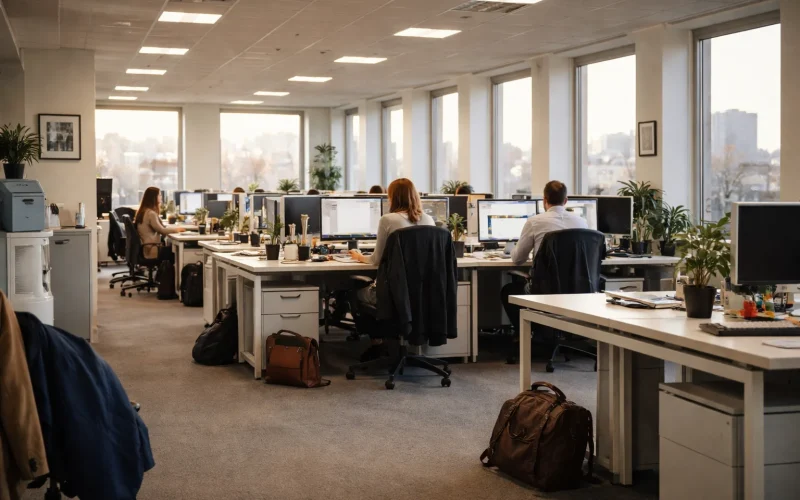
Hybrid working has prompted employers to rethink the purpose of office environments, emphasising adaptability over fixed routines. Workplaces once centred on rows of desks now require multipurpose zones, meeting varied day-to-day needs as attendance fluctuates.
Employees expect a blend of quiet corners for concentration, inviting collaborative spaces, and social spots for informal interaction. To stay effective, office design must now support changing occupancy without feeling either empty or overcrowded throughout the week.
With many organisations experiencing higher attendance during the middle of the week, adaptable office layouts are particularly valuable for managing busy periods without leaving substantial areas unused on quieter days.
Key Principles for Space Planning and Zoning
Zoning is a vital aspect of modern office layouts, helping to allocate areas for specific functions. Mixing spaces for team meetings, private work, and social connection allows staff to choose environments that best suit their workstyle on any given day.
Balancing the ratio of desks to shared areas, incorporating circulation zones, and situating amenities for quick access all play important roles. These principles ensure the workplace remains efficient and welcoming, regardless of how many people are present.
Flexible Layouts and Future-proofing Strategies
Creating flexibility starts with selecting modular furniture and layouts that can be easily adapted. Movable partitions and multi-use rooms let teams reconfigure space to meet new demands as working patterns evolve.
Planning for reconfiguration minimises disruption and costs down the line while supporting innovation. Storage solutions, like lockers and pop-up touchdown points, support hybrid working by facilitating easy transitions between remote and office-based activities.
Businesses can also consider shared desks and bookable workstations, particularly where fixed desk allocations no longer reflect actual attendance. However, sufficient workspace must remain available during peak office days.
Technology and Support for Seamless Hybrid Work
Seamless connectivity is one of the most important expectations in today’s office environments. Integrated meeting room technology for both in-person and video calls, along with robust power and data access at every desk, allows employees to work efficiently from any location.
Acoustic design is increasingly vital, ensuring sound privacy for video conferencing and quiet working. Careful acoustic planning helps control noise transfer, even in open spaces, and supports confidential conversations or focused work without distraction.
As hybrid meetings become a regular part of workplace operations, reliable cameras, microphones, wireless connectivity, and accessible video conferencing features can help remote and office-based employees participate more equally.
Comfort, Wellbeing, and Daily Operational Realities
Comfort and wellbeing are central to employee satisfaction in hybrid-ready spaces. Good lighting, ventilation, and thermal comfort all matter, as does providing ergonomic furniture to reduce fatigue and support diverse working postures.
Quiet zones and relaxation spaces help support mental health and cater to a range of working styles. Amenities such as showers, kitchens, and secure storage help streamline the experience for staff navigating variable routines.
Managing Support Spaces and Ongoing Operations
Support spaces like lockers, storage, and reception areas are key to smooth daily operations. They help reduce friction for employees who transition frequently between office and remote settings.
Wear and tear in shared spaces, as well as changing cleaning needs, influence material and finish selection. Durable, easy-to-clean surfaces make a practical difference, particularly when office rhythms vary from day to day.
Businesses are also paying closer attention to energy efficiency, with heating, lighting, and cleaning schedules increasingly considered alongside actual workspace usage. Managing these services around occupancy patterns can help avoid unnecessary operating costs.
Using Occupancy Data to Optimise Hybrid Office Spaces
Understanding how employees actually use the workplace is essential for creating an efficient hybrid office. Rather than relying on assumptions about daily attendance, businesses can use occupancy data, desk booking systems, and employee feedback to identify which spaces are most valuable.
According to research published by the British Council for Offices, average UK office utilisation has shifted from the traditional 80% benchmark to approximately 66%. This highlights the importance of designing spaces around actual working patterns rather than maximum theoretical occupancy.
The BCO’s 2025 findings also identified stronger midweek attendance, with average occupancy of approximately 40% between Tuesday and Thursday, compared with 30% across all weekdays. These figures reinforce the need to plan office capacity around peak demand rather than relying solely on weekly averages.
Smart occupancy sensors and workspace management software can help organisations monitor desk usage, meeting room demand, and peak attendance periods. These insights make it easier to adjust layouts, reduce underused areas, and ensure sufficient collaborative spaces are available when employees need them.
However, workplace utilisation should not be measured through occupancy figures alone. Employee satisfaction, accessibility, noise levels, and the availability of suitable workspaces are equally important when evaluating office performance.
Businesses using occupancy monitoring technology should also consider data privacy, transparency, and how workplace information is collected and managed.
Regularly reviewing these factors allows businesses to make informed improvements without undertaking major renovations. A data-driven approach to hybrid office design can support better space allocation, control operational costs, and maintain a comfortable working environment as workforce requirements evolve.
Avoiding Common Mistakes in Hybrid Office Adaption
Some frequent pitfalls include overestimating demand for enclosed meeting rooms, which can leave these areas underused. It is equally important not to overlook sound privacy, especially for staff taking part in video meetings surrounded by activity.
You should also ensure power and data access are readily available throughout the space and avoid layouts that are difficult to reconfigure. Taking a balanced, forward-looking approach can help you get the most value from your office investment over time.
Another common mistake is reducing desk numbers without considering attendance peaks, which can create unnecessary pressure on shared workstations during popular office days.
Every decision, from zoning to technology integration, influences how effectively the office supports hybrid working. By focusing on adaptability, wellbeing, and operational ease, you can foster a workplace that remains resilient and welcoming, regardless of how work continues to change.





2 comments