




Table of Contents Show
Commercial lighting shapes how people experience a built environment. It affects visibility, atmosphere, energy use, and operational efficiency.
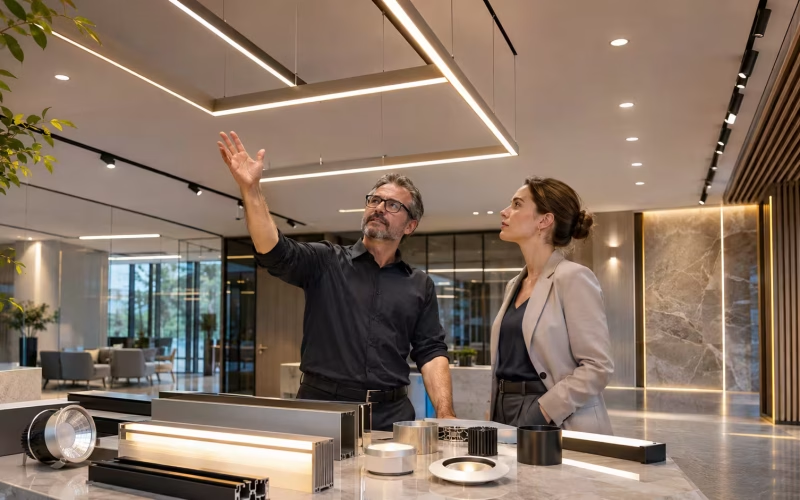
Choosing the right lighting manufacturer requires more than product selection. Expert input connects design intent with practical lighting performance and can also simplify complex commercial lighting requirements.
The right partner should understand ubiquitous fittings, controls, testing, and installation constraints. That expertise becomes especially valuable across large commercial projects.
What Should Engineering Cover Before Products Reach The Site?
A lighting manufacturer can contribute during early design stages. Product selection should follow the space and its intended use. Ceiling heights, layouts, mounting methods, and lighting levels all matter.
Controls can also influence energy performance and user experience. Early engineering helps avoid unsuitable specifications later. It can create opportunities for more efficient lighting strategies. A technically experienced manufacturer can support these decisions directly.
Complex specifications may also require specialist manufacturing input, which can involve bespoke products, emergency systems, or specialised profiles. Track systems often require different mounting and distribution approaches.
Linear lighting may need specific lengths or installation configurations and bespoke sizing and shapes. Emergency lighting can involve separate compliance considerations.
Understanding the unique environment and having these technical discussions early can prevent costly design changes later. This makes final specifications more practical and achievable.
Testing Turns Engineering Decisions Into Measurable Performance
Engineering quality depends on more than drawings and specifications. Products need appropriate testing before commercial deployment.
Photometric testing establishes how luminaires distribute light. A goniophotometer supports detailed photometric measurements and analysis.
EMC testing can assess electromagnetic compatibility. These processes provide useful evidence for technical decisions and support more consistent project outcomes.
Testing becomes especially valuable when projects require bespoke lighting. Custom products may need different verification than standard ranges. In-house testing can identify potential issues earlier and also provides accurate lighting data for project calculations.
This reduces reliance on assumptions during design development. For complex spaces, measurable performance should guide specification decisions.
Smart Controls Can Extend The Value Of Good Lighting Design
Modern commercial lighting involves more than luminaires alone. Controls can respond to occupancy and available daylight.
Bluetooth systems can provide flexible control across larger spaces. HubSense, for example, supports smart lighting control applications. Such systems can reduce unnecessary energy consumption. They can also support changing workplace requirements.
The BP International Centre provides a useful commercial example. More than 8,500 fittings were upgraded across the project. Fluorescent fittings were converted to LED technology and Bluetooth smart controls were also introduced across the site.
The project delivered over £1.5 million in annual energy savings. It also avoided more than £600,000 predicted in replacement costs. Engineering can produce measurable commercial outcomes.
Existing Lighting Assets Support Modern Design
An expert manufacturer should assess existing infrastructure carefully. Complete replacement is not always the only practical route. Suitable fittings may support repair, conversion, retrofit, or remanufacturing.
LED conversion modernises existing products without replacing everything. Modular approaches can also extend useful product lifecycles.
This matters during refurbishment and commercial fit-out projects. Existing fittings may contain valuable materials and distinctive design features.
Retaining suitable products can reduce unnecessary material waste. Professional assessment determines which components remain technically viable. The resulting approach can balance design, performance, cost, and sustainability.
Precision Engineering Improves Long-Term Project Value
Commercial lighting requires coordination between design and technical performance. An experienced manufacturer can support both sides.
Product knowledge strengthens specifications and reduces avoidable compromises. Testing can provide evidence behind important technical decisions. Smart controls further improve operational flexibility and efficiency.
For complex projects, engineering expertise should influence decisions early. It can align aesthetics, performance, compliance, and long-term value. This makes lighting manufacturer expertise relevant beyond product supply.
The right partnership can turn lighting into engineered infrastructure and creates solutions tailored to real commercial requirements.