





Table of Contents Show
Last reviewed: July 2026
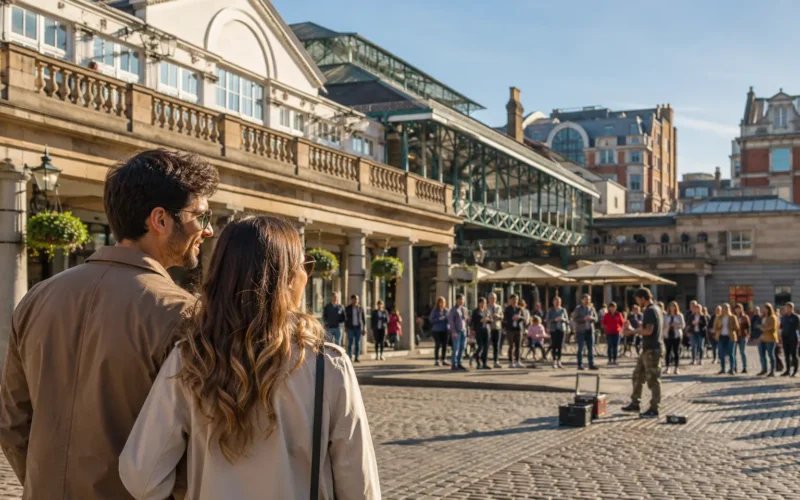
Covent Garden is one of the most recognisable neighbourhoods in central London. It combines a historic market, elegant architecture, independent shops, international brands, restaurants, theatres, museums and live street entertainment within a compact and highly walkable area.
At its centre is the pedestrianised Piazza and the nineteenth-century Market Building. Around them are the Apple Market, Jubilee Market, Royal Opera House, London Transport Museum and St Paul’s Church, commonly known as the Actors’ Church. A few streets farther north are Seven Dials, Neal Street and the brightly coloured courtyard of Neal’s Yard.
This combination gives Covent Garden a character that is difficult to reproduce elsewhere. It functions as a shopping district, theatre quarter, dining destination, historic landmark and public gathering place at the same time.
A visitor could walk through the Piazza in less than ten minutes. However, anyone who explores the market halls, watches a performance, visits a museum, eats lunch, browses Seven Dials and attends a West End show can easily spend a complete day here.
The area is particularly convenient for first-time visitors because Trafalgar Square, Leicester Square, Soho, the Strand, Somerset House, Chinatown and the River Thames are all within walking distance. Visitors arriving through Waterloo can use this guide to the station and its surrounding attractions before crossing Waterloo Bridge towards Covent Garden.
What Is Covent Garden in London?
 Covent Garden is a historic district on the eastern edge of London’s West End. The name refers both to the wider neighbourhood and, more specifically, to the Piazza and Market Building at its centre.
The neighbourhood is generally understood to extend between St Martin’s Lane in the west, Drury Lane in the east, the Strand in the south and the streets around Seven Dials in the north. Parts of the district lie within the City of Westminster, while streets around Seven Dials extend into the London Borough of Camden.
The main areas visitors encounter are:
The Piazza and Market Building are public spaces, and visitors do not need a ticket simply to walk around. The Market Building remains accessible throughout the day, although individual shops, stalls and restaurants operate their own opening hours. (Covent Garden)
Why Is Covent Garden Famous?
Covent Garden is famous for several related reasons rather than one single attraction.
It was once one of London’s most important fruit, vegetable and flower markets. Although wholesale trading moved to Nine Elms during the twentieth century, the historic market buildings were preserved and given new commercial and cultural uses.
The district is also closely associated with performance. The Royal Opera House stands on Bow Street, West End theatres occupy many of the neighbouring streets, and Covent Garden’s street performers have become an attraction in their own right.
Its architectural setting is another major reason for its popularity. The colonnades, cobbles, covered market halls and open Piazza create an urban space that feels different from a conventional shopping street.
Finally, Covent Garden’s location makes it a natural meeting point. It sits between Soho, Holborn, the Strand, Trafalgar Square and the theatre district, allowing visitors to combine several parts of central London in one itinerary.
Is Covent Garden Worth Visiting?
Covent Garden is worth visiting for most people travelling to central London, particularly those interested in markets, theatre, historic architecture, shopping, food or street entertainment.
It is also a practical destination for mixed groups. One visitor may want to browse the market stalls, another may prefer designer shops, while children may be more interested in performers or the London Transport Museum. These activities can be combined without travelling between distant neighbourhoods.
The principal disadvantage is that Covent Garden becomes extremely busy. Weekends, school holidays, December evenings and the hours immediately before West End performances can be crowded. Restaurants in prominent locations may also charge more than comparable establishments outside the West End.
The best way to experience it is not simply to stand in the Piazza. Visitors should explore the side streets, walk through the covered passages, enter the Actors’ Church garden, continue towards Seven Dials and allow time for the area’s smaller details.
A Brief History of Covent Garden London
Understanding Covent Garden’s history explains why the area contains such an unusual mixture of religious, aristocratic, commercial and theatrical influences.
How Did Covent Garden Get Its Name?
The name does not come from a modern convent. It developed from the medieval term “convent garden”, referring to land associated with the monks of Westminster Abbey.
During the Middle Ages, the area contained agricultural land, orchards, meadows and gardens used by the abbey. Over time, “convent” was shortened to “covent”, producing the name that survives today.
The name therefore preserves the memory of a landscape that existed long before central London expanded around it.
How Was the Piazza Created?
A major transformation began during the seventeenth century when the Bedford Estate commissioned architect Inigo Jones to design a formal residential square.
Jones created a classically influenced Piazza surrounded by houses and anchored by St Paul’s Church. Work on the church began in 1631 and was completed in 1633, although it was consecrated later. The Actors’ Church describes the commission as part of a plan for a square, mansions, a church and four surrounding streets. (Actors Church)
This development was important because the Piazza became one of London’s earliest planned formal squares. Its design influenced later residential squares across the capital.
How Did the Market Develop?
Informal produce trading gradually became established in the square during the seventeenth century. As London’s population grew, the market expanded and became increasingly important for fruit, vegetables, flowers and other food products.
The market’s success also created problems. Congestion, refuse, noise and poorly organised trading conditions affected the square and surrounding streets.
During the nineteenth century, a purpose-built market hall was commissioned to impose greater order. Architect Charles Fowler designed the neoclassical Market Building, which opened in 1830. Its stone colonnades and iron-and-glass structures form much of the setting visitors recognise today.
When Did the Wholesale Market Leave Covent Garden?
By the twentieth century, Covent Garden’s narrow streets were unsuitable for a modern wholesale operation. Lorries, traders and deliveries created severe congestion, particularly during the early morning.
The wholesale fruit, vegetable and flower market eventually moved to a larger purpose-built site at Nine Elms in the 1970s.
The departure created uncertainty about what would happen to the historic district. Large-scale redevelopment proposals raised the possibility that parts of Covent Garden could be demolished.
Residents, conservationists and community groups opposed the plans. Their campaign contributed to the preservation of the market buildings and surrounding streets. Following restoration, the Market Building reopened in 1980 as a specialist shopping and leisure destination.
How Did Covent Garden Become a Visitor Destination?
The redevelopment retained the area’s architectural identity while changing its economic role. Wholesale produce trading was replaced by shops, craft stalls, restaurants, cafés and cultural attractions.
This transition helped establish a model now common in historic urban markets: preserving the building and public atmosphere while introducing retail, hospitality and entertainment.
Covent Garden today is much more commercially polished than the working market it replaced. Nevertheless, the market halls, street pattern, theatrical connections and public performances retain visible links with its past.
What Are the Best Things to Do in Covent Garden London?
There is no single correct itinerary. The best activities depend on whether a visitor is primarily interested in history, shopping, food, performance or family attractions.
The following places provide the most complete introduction to the neighbourhood.
1. Explore Covent Garden Piazza
 The Piazza is the logical starting point for a first visit. It is surrounded by the Market Building, St Paul’s Church, restaurants, shops and spaces used by street performers.
Visitors should walk around the complete perimeter rather than entering from James Street and immediately heading into the market. Different sides of the square reveal different architectural views.
The western side provides access to St Paul’s Church and its garden. The southern side leads towards Jubilee Market and the London Transport Museum. The eastern side connects with Russell Street and Bow Street, while the northern side leads towards James Street, King Street and the Market Building.
The Piazza is most atmospheric when it is active but not overcrowded. Earlier mornings provide clearer views of the architecture. Late afternoons and evenings create a livelier atmosphere as restaurants fill and theatre audiences arrive.
2. Walk Through the Historic Market Building
 The Market Building is the visual centrepiece of Covent Garden. Its colonnades, covered walkways and lower-level spaces contain shops, restaurants and market stalls.
Visitors can enter from several directions, making it easy to miss parts of the building. Walking through the central avenue, side colonnades and lower level gives a better sense of its structure.
The building is now a mixture of permanent retail units and temporary or rotating market activity. Some businesses are international brands, while others focus on gifts, food, jewellery or specialist products.
Architecture is a significant part of the experience. Look upward at the ironwork and glazed roofs rather than concentrating entirely on shopfronts.
The official Market Building and Piazza guide provides updates on current installations and experiences.
3. Browse the Apple Market
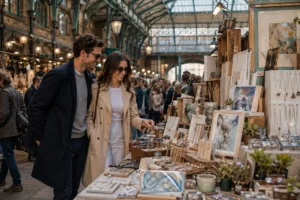 The Apple Market occupies part of the covered Market Building. Despite its name, it is no longer a fruit market.
Its trading focus changes during the week. Mondays are traditionally associated with antiques and collectables, while Tuesday to Sunday trading generally gives greater prominence to handmade crafts.
Typical items may include jewellery, prints, artwork, decorative objects, leather goods, photography, home accessories and gifts. The precise traders and available products vary.
The market is particularly useful for visitors looking for something more distinctive than a conventional London souvenir. However, not every item is inexpensive, and handmade products should not be compared directly with mass-produced souvenir goods.
The Apple Market generally operates daily from 10am until 6pm, although visitors should confirm arrangements before making a special journey.
Anyone particularly interested in markets can compare the experience with other food and trading markets across London.
4. Visit Jubilee Market
 Jubilee Market sits on the south side of the Piazza and has a more traditional covered-market atmosphere.
Its schedule changes by day:
The current published schedule lists Monday antiques trading from 5am to 5pm, general trading from 10.30am to 7pm between Tuesday and Friday, and weekend arts-and-crafts trading from 10am to 6pm. Hours may change around holidays or special events, so visitors should check the current Jubilee Market timetable before travelling.
Monday is the most distinctive day for collectors. Stalls may carry vintage jewellery, prints, silver, china, books, decorative items and other collectables.
The general market is more varied and tourist-oriented. Weekend trading places greater emphasis on handmade goods, art and craft products.
Jubilee Hall itself is historically significant. The hall was built in 1904, later restored and officially reopened in the 1980s. (Jubilee Market)
5. Watch the Covent Garden Street Performers
 Street performance is central to Covent Garden’s public identity. Depending on the day and time, visitors may encounter classical musicians, singers, circus performers, magicians, comedians or speciality acts.
Performances take place in designated locations rather than randomly across the district. Spaces inside the Market Building and around the Piazza have different arrangements and management responsibilities.
Performers working within the Market Building are selected through an organised audition process. This distinguishes the programme from informal busking and helps maintain the area’s reputation for technically accomplished acts.
A complete performance may last considerably longer than a passer-by expects. Some acts slowly gather a crowd before beginning their main routine.
Watching is free, but contributing money at the end is customary when a visitor has stayed for the show. The performer’s collection is effectively the ticket price chosen by the audience.
Parents should supervise small children carefully because crowds can form quickly. Visitors should also remain aware of bags and phones in congested public spaces.
6. Visit the London Transport Museum
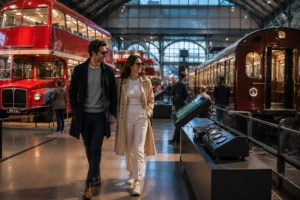 The London Transport Museum occupies a prominent building beside the Piazza and is one of the neighbourhood’s most substantial indoor attractions.
Its galleries explore the development of public transport in London, including buses, Underground trains, maps, design, engineering and the growth of the city around its transport network.
The museum works particularly well for families, but it is not exclusively a children’s attraction. Adults interested in industrial history, graphic design, urban planning or London’s development can spend several hours inside.
Historic vehicles and reconstructed environments make the collection accessible to visitors who do not have specialist knowledge.
The museum generally opens daily, with its official visitor information currently listing gallery hours of 10am to 6pm and last entry at 5pm. Ticket prices, annual-pass conditions and special events should be checked through the London Transport Museum visitor pages.
The museum is an especially useful choice during heavy rain because it can fill a substantial part of the day.
7. Experience the Royal Opera House
 The Royal Opera House on Bow Street is the cultural landmark most strongly associated with Covent Garden.
It is the principal home of the Royal Ballet and Opera, hosting major ballet and opera productions along with workshops, tours, talks and related events.
A performance ticket offers the fullest experience, but visitors do not necessarily need to attend a production to enter parts of the building. Public areas, cafés, restaurants and terraces may be accessible during normal opening times, subject to events and operational restrictions.
The building combines its historic auditorium with modernised public spaces. This contrast is part of its appeal.
Visitors can check current performances, tours and opening arrangements through the Royal Ballet and Opera visitor information. The venue advises that Covent Garden is its nearest Underground station, while Leicester Square, Holborn and Tottenham Court Road can be useful alternatives for passengers requiring different access arrangements.
Behind-the-scenes tours are particularly valuable for visitors interested in stage technology, costume, rehearsal and production work. The programme changes, and advance booking is normally advisable.
8. Step Inside St Paul’s Church
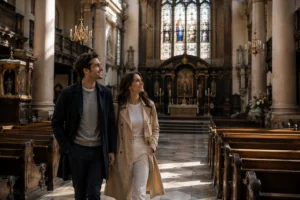 St Paul’s Church stands on the western side of the Piazza. It is often called the Actors’ Church because of its longstanding connection with London’s theatrical profession.
The building was designed by Inigo Jones and completed during the seventeenth century. Its exterior portico faces the Piazza, while the main entrance is reached from the opposite side.
Inside are memorials connected with actors, performers and other theatrical figures. The church also holds worship, concerts, memorials and live performances.
The garden behind the church is one of the most useful quiet spaces in central Covent Garden. Benches, trees and the enclosure of the churchyard make it feel separated from the activity of the Piazza.
The church is usually open to visitors on weekdays, although weddings, memorials, rehearsals and maintenance can affect access. Anyone making a dedicated visit should consult the Actors’ Church opening information first.
Visitors should remember that this remains an active place of worship rather than a conventional tourist attraction.
9. Discover Seven Dials
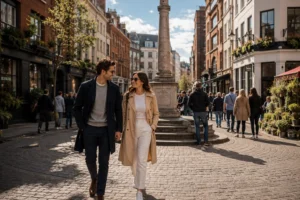 Seven Dials is a network of streets arranged around a central monument north of the main Covent Garden Piazza.
The area was laid out during the late seventeenth century. Seven streets converge around the column, creating one of central London’s most distinctive street patterns.
It offers a different atmosphere from the Piazza. Although still busy and commercial, Seven Dials contains more independent fashion, lifestyle, beauty and food businesses alongside established brands.
The monument provides a useful orientation point. From there, visitors can explore Monmouth Street, Earlham Street, Short’s Gardens, Neal Street and the surrounding lanes.
Traffic moves through parts of Seven Dials, so visitors should not treat the central junction as a fully pedestrianised square. The monument and unusual street geometry can distract people from approaching vehicles and cyclists.
The best way to explore is to choose one street, walk to its end and return by a different route rather than repeatedly circling the column.
10. Photograph Neal’s Yard
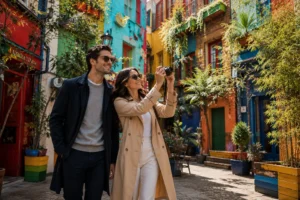 Neal’s Yard is a small courtyard reached through narrow entrances off Short’s Gardens and Monmouth Street.
It is known for brightly painted buildings, hanging plants, independent businesses and a compact pedestrian space. Its visual character contrasts with the stone architecture of the Piazza.
The courtyard is much smaller than photographs sometimes suggest. During busy periods, a relatively limited number of visitors can make it feel crowded.
The area developed its modern identity from the 1970s onwards, when alternative businesses, food enterprises and wellbeing-focused organisations began using previously neglected buildings. The courtyard’s history is closely associated with entrepreneur and environmental campaigner Nicholas Saunders.
Neal’s Yard describes itself as a traffic-free communal space where people can sit without being required to make a purchase. (With love from Neal’s Yard)
Early morning is the easiest time for photographs. During lunch and mid-afternoon, tables, delivery activity and groups of visitors can fill much of the courtyard.
The courtyard should be treated as a functioning business and residential environment rather than a film set. Visitors should keep entrances clear and avoid photographing people at close range without permission.
11. Walk Along Neal Street
 Neal Street connects the Seven Dials area with the northern edge of Covent Garden.
It is traditionally associated with footwear, fashion and independent shopping, although the mix of businesses continues to evolve.
The street is pedestrian-friendly but not always fully pedestrianised. Deliveries and vehicles may still use sections at permitted times.
Neal Street is a useful route for visitors travelling between Covent Garden and Tottenham Court Road. It also provides access to side streets that are quieter than the Piazza.
Rather than focusing only on major shopfronts, visitors should look into courtyards and connecting lanes. Many of the area’s most interesting cafés and independent shops are not positioned directly on the busiest route.
12. Tour Theatre Royal Drury Lane
 Theatre Royal Drury Lane is one of the most historically important theatres in London. The site has a theatrical history extending across several centuries, although the building has been reconstructed and altered over time.
The theatre remains an active West End venue but also operates as an all-day destination with tours, dining and hospitality spaces.
A guided tour can be worthwhile even for someone who is not attending the current production. Tours explore the theatre’s architecture, royal connections, backstage stories and performance history.
The official venue describes it as the oldest theatre site in continuous theatrical use in the world. Current tour dates, prices and access details are published through the Theatre Royal Drury Lane programme.
Visitors attending an evening production should arrive early enough to see the public spaces without rushing directly to their seats.
13. See a Production at the Donmar Warehouse
 The Donmar Warehouse is an intimate theatre located near Seven Dials.
Its relatively small auditorium creates a different theatrical experience from the large commercial venues of the West End. Productions often feature prominent actors, directors and playwrights working in a close audience setting.
The building has served several purposes over its history, including use connected with brewing, film and the former produce market. It later became associated with theatre and developed into an influential independent venue.
Because the auditorium is small, popular productions can sell quickly. Visitors should examine the current Donmar programme well before their chosen date.
The theatre is on Earlham Street, a few minutes’ walk from Covent Garden and Leicester Square stations. (Donmar Warehouse)
14. Walk to Somerset House
 Somerset House is not inside the central Piazza, but it is close enough to form part of a Covent Garden itinerary.
The large neoclassical complex stands on the Strand beside the River Thames. It hosts exhibitions, cultural organisations, installations, events, restaurants and seasonal programmes.
Its courtyard changes character throughout the year. Depending on the season and programme, visitors may encounter fountains, installations, performances or ticketed events.
The River Terrace provides views towards the Thames and South Bank. Walking from Covent Garden to Somerset House also takes visitors through quieter parts of the Strand and Wellington Street.
Entry to the general site is normally free, although individual exhibitions and events may charge admission. Somerset House currently states that its site is open seven days a week, with different areas operating their own hours. Visitors should consult the latest access and exhibition details before travelling.
15. Continue to Trafalgar Square and the National Gallery
 Trafalgar Square is approximately a ten-minute walk from Covent Garden, depending on the starting point and crowd levels.
The route through Bedford Street or St Martin’s Lane allows visitors to combine the market district with one of London’s major civic spaces.
The National Gallery provides a useful free cultural addition to the day. Its permanent collection includes major European paintings, while temporary exhibitions may require paid tickets.
General admission remains free, with donations welcomed. The Gallery currently opens daily and offers later opening on Fridays, although booking a free entry slot can reduce queuing at busy times. (National Gallery)
After visiting, travellers can consult this guide to restaurants around Trafalgar Square when deciding where to eat.
Where Is the Best Shopping in Covent Garden?
Covent Garden shopping is spread across several distinct zones. Visitors who remain only inside the Market Building see just one part of the retail offer.
The Market Building
The Market Building combines permanent shops with smaller stalls. It is best for gifts, beauty products, accessories, jewellery, speciality food and recognisable premium brands.
The setting is part of the attraction, but visitors should not assume every business is independent simply because it occupies a historic building.
Long Acre
Long Acre functions as one of the neighbourhood’s main shopping streets. It carries a broad mixture of fashion, outdoor clothing, beauty, footwear and lifestyle retailers.
It is usually busier and more conventional than the smaller Seven Dials streets. It is useful when visitors need a specific mainstream retailer rather than an unusual souvenir.
Floral Street and Floral Court
Floral Street runs parallel to Long Acre and offers fashion, dining and attractive architecture. Passages connect it with King Street, Bow Street and other parts of the district.
Floral Court provides a more enclosed setting containing restaurants and shops. The streets here are quieter than James Street but still close to the Piazza.
Seven Dials
Seven Dials is generally the strongest area for independent and design-led shopping. The exact business mix changes, but visitors can expect fashion, beauty, homeware, specialist retail and smaller cafés.
Monmouth Street and Earlham Street are particularly useful for browsing without following a predetermined list.
Neal Street
Neal Street contains fashion, footwear and lifestyle retailers, with smaller businesses appearing along connecting streets.
It is also a practical north south walking route, making it easy to browse while travelling between Covent Garden and Tottenham Court Road.
What Should Visitors Buy in Covent Garden?
The best purchases are those connected with the neighbourhood’s genuine strengths rather than generic London souvenirs.
Possible choices include:
- Handmade jewellery from a market trader
- Art prints or photography
- Vintage objects or collectables on an antiques-market day
- Theatre-related gifts
- London transport design products
- Specialist beauty or fragrance products
- Books from an independent bookseller
- Small homeware or craft items
- Food gifts that can be transported safely
Anyone buying antiques or higher-value jewellery should ask the trader for clear information about age, materials, condition and returns. “Vintage-style” does not necessarily mean vintage, while a decorative object may have limited financial value despite its attractive appearance.
Is Covent Garden Good for Food?
Covent Garden is one of central London’s largest dining areas. Its restaurants range from quick takeaway counters and food halls to historic dining rooms and expensive tasting menus.
Location strongly affects both price and atmosphere. Restaurants facing the Piazza offer convenient views but can command a premium. Side-street establishments may provide a quieter experience, while Seven Dials is often better for informal group dining.
The official Covent Garden dining directory is useful for checking current openings, dietary filters and new businesses.
Visitors interested in comparing informal options elsewhere can also explore these popular London street-food locations.
Where Can Visitors Eat Breakfast in Covent Garden?
Breakfast options include bakeries, hotel restaurants, specialist coffee shops and all-day dining venues.
For a quick morning, a pastry and coffee are usually more practical than a complete sit-down breakfast. This allows visitors to reach the Piazza before the largest crowds arrive.
A longer breakfast makes sense when Covent Garden is the first stop of the day and shops have not yet opened. Many retailers begin trading around 10am, so breakfast can fill the quieter opening period.
Visitors should distinguish between places that merely sell coffee and those with full breakfast kitchens. Table service, weekend brunch and hotel breakfasts normally cost more and take longer.
Where Is Good for Lunch?
Lunch depends heavily on group size and budget.
Solo visitors and couples can often find counter seats or small tables without much planning. Larger groups should consider booking, especially from Thursday to Sunday.
Seven Dials Market is useful when people want different cuisines but still wish to eat together. It operates as an indoor food hall with multiple traders and shared seating. Current hours vary by day, with later opening into the evening. (sevendialsmarket.com)
Market snacks and takeaway food can appear cheaper, but buying several small items may cost as much as a restaurant meal. Visitors should compare the total rather than the price of one dish.
What Is the Best Pre-Theatre Dining Strategy?
A successful pre-theatre meal depends more on timing than restaurant prestige.
First, check the exact performance start time and theatre location. A venue described as being “in Covent Garden” could still require a ten- or fifteen-minute walk through crowded streets.
For a 7.30pm performance, a booking around 5.15pm to 5.45pm usually gives more flexibility than a 6.30pm reservation. Diners should tell the restaurant that they are attending a show and ask whether a pre-theatre menu is designed to finish within a set period.
A fixed menu can be more reliable than ordering several courses individually. The final bill should be requested before the group is ready to leave, particularly in a busy restaurant.
Walking time should include queues for theatre security, collecting tickets, visiting cloakrooms and finding seats. Arriving at the theatre door at the advertised start time is too late.
Which Historic Restaurants Are Associated With Covent Garden?
Covent Garden and the surrounding theatre district contain several long-established restaurants.
Rules on Maiden Lane is widely known for traditional British cooking and its theatrical history. J. Sheekey near St Martin’s Court specialises in fish and seafood, while The Ivy developed a strong association with the entertainment industry.
These venues are not budget choices, and their historical reputation does not guarantee that every visitor will prefer their style of food. They are best approached as dining experiences rather than purely functional meals.
Reservations, menus, dress expectations and accessibility should be confirmed directly because arrangements can change.
Where Can Visitors Find Affordable Food?
 Covent Garden is not London’s cheapest neighbourhood, but lower-cost meals are possible.
Useful strategies include eating away from the Piazza, choosing bakeries or takeaway counters, using food halls, selecting lunch deals and avoiding multiple drinks with a meal.
Seven Dials and the streets towards Holborn generally provide more range than the immediate market frontage.
Visitors should also remember that “street food” is not automatically inexpensive. A main dish, side and drink from separate traders can produce a restaurant-level bill.
For another food-focused day, travellers can continue towards London Bridge and explore this detailed introduction to Borough Market’s traders and food choices.
Is Covent Garden Good for Afternoon Tea?
Covent Garden is well suited to afternoon tea because several hotels, theatres and restaurants offer versions of the experience.
Options range from traditional sandwiches, scones and cakes to theatre-themed menus and more informal pastries with tea.
A full afternoon tea can replace lunch rather than supplement it. Visitors should check what is included, whether service charges apply and whether dietary alternatives require advance notice.
Afternoon tea also takes longer than many visitors expect. Allowing 90 minutes to two hours is sensible, particularly for a formal service.
Where Can Visitors Have a Drink?
The area contains historic pubs, cocktail bars, wine bars, hotel lounges and theatre bars.
A traditional pub may provide more local character than a Piazza-facing bar, but popular establishments become crowded after work and before performances.
Cocktail bars often require reservations, while pubs are more likely to accept walk-ins. Seating can nevertheless be difficult to find on Thursday, Friday and Saturday evenings.
People planning a later night elsewhere in the West End can compare options through this broader guide to London nightlife and evening entertainment.
What Can Families Do in Covent Garden?
Covent Garden can work well for families because many attractions are close together and the Piazza is largely pedestrianised.
The London Transport Museum is the strongest dedicated family attraction. Street performances can also hold children’s attention, while market stalls provide short activities that do not require long periods of concentration.
However, the neighbourhood is not entirely traffic-free. Bow Street, Long Acre, Drury Lane, the Strand and the streets around Seven Dials carry vehicles.
Families using pushchairs should expect cobbles, busy pavements, steps and occasional queues. Smooth routes are available into parts of the Market Building, but the historical environment can still require planning.
A simple family itinerary might include:
- Arriving before the lunchtime crowds
- Watching one street performance
- Visiting the London Transport Museum
- Eating an early lunch
- Walking through the Market Building
- Taking a break in St Paul’s Church garden
- Finishing with Neal’s Yard or a dessert stop
Trying to combine the museum, extensive shopping, a long restaurant meal and an evening show may be too demanding for younger children.
What Free Things Can Visitors Do in Covent Garden?
Many of Covent Garden’s defining experiences do not require an admission fee.
Visitors can explore the Piazza, enter the Market Building, browse the markets, watch street entertainment, walk through Seven Dials, visit Neal’s Yard and enter St Paul’s Church when it is open.
Watching street performances is technically free, although contributing to a performer is appropriate when staying for the complete act.
The National Gallery and general public areas of Somerset House provide further free possibilities within walking distance. Some temporary exhibitions or events charge separately.
For a wider low-cost itinerary, see these free activities available around London.
Is Covent Garden Good for Couples?
Covent Garden is a popular date destination because food, entertainment and walking routes can be combined without complicated travel.
A relaxed date could begin with drinks or coffee around Seven Dials, continue through Neal’s Yard and finish with dinner near the Piazza.
A more formal evening could combine a Royal Opera House performance, West End play or ballet with pre-theatre dining.
The district is visually attractive after dark, particularly when the Market Building and surrounding restaurants are illuminated. However, couples seeking a very quiet or private evening may find the busiest streets too crowded.
St Paul’s garden, Somerset House’s River Terrace and some of the side streets around Floral Court provide calmer alternatives to the central Piazza.
What Is Covent Garden Like at Night?
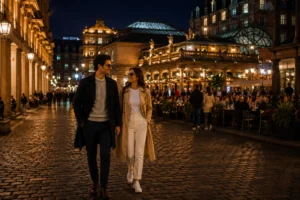 Covent Garden remains active after most market stalls and shops close.
The evening economy is driven by theatres, restaurants, bars, hotels and performances. Between approximately 5pm and 7.30pm, the area fills with people eating before shows. Another period of activity follows when theatre audiences leave.
The Piazza is attractive after dark, but the atmosphere changes as formal market trading ends. Visitors seeking nightlife should view Covent Garden as an evening dining and theatre district rather than a major nightclub centre.
Soho and Leicester Square offer later and more intensive nightlife within walking distance.
Public transport continues into the evening, but visitors should check last-train times, night-bus routes and any engineering works through Transport for London.
What Are the Hidden Places in Covent Garden?
Covent Garden’s “hidden” places are not necessarily secret. Many are simply missed by people following the most direct route from the Underground station to the Piazza.
St Paul’s Church Garden
The garden is immediately beside one of London’s busiest public spaces yet feels substantially quieter. It is one of the best places to pause without entering a café.
Neal’s Yard
Although heavily photographed, the courtyard can still be missed because its entrances are narrow and do not provide a clear view from surrounding streets.
Goodwin’s Court
Goodwin’s Court is a narrow passage near St Martin’s Lane containing historic-style bowed windows and old-fashioned lamps.
It is a residential environment and should be visited quietly. Doorways must remain clear, and visitors should not stage intrusive photo sessions outside people’s homes.
Cecil Court
Cecil Court lies between St Martin’s Lane and Charing Cross Road. It is known for specialist booksellers, antiquarian shops, prints, maps and collectables.
The street is particularly useful for visitors interested in literature and historic London retail.
Floral Court
Floral Court is reached through passages around Floral Street and King Street. Its enclosed architecture and dining spaces provide an attractive alternative to the main Piazza.
The Royal Opera House Terraces
Publicly accessible areas within the Royal Opera House can provide an elevated perspective over surrounding rooftops, subject to opening hours, events and venue access.
The Connections Beneath and Around the Market
Visitors often enter one side of the Market Building and leave from another without exploring the lower level, stairways and side colonnades. Walking slowly reveals a more complex building than the central avenue suggests.
When Is the Best Time to Visit Covent Garden?
The best time depends on the desired experience.
For architecture and photography, early morning is best.
For street entertainment and a lively atmosphere, afternoon is more suitable.
For shopping, late morning on a weekday provides the best balance between open businesses and manageable crowds.
For dining and theatre, early evening is naturally attractive, but advance reservations are more important.
What Is Covent Garden Like at Christmas?
Covent Garden becomes one of central London’s most prominent festive destinations.
The Market Building and Piazza are normally decorated with large-scale seasonal installations, lights and a major Christmas tree. Shops and restaurants introduce seasonal displays and menus, while visitor numbers increase sharply.
The visual effect is strongest after dark, but this is also when congestion becomes most intense.
Visitors who want photographs should consider arriving shortly before dusk on a weekday. By early evening, pedestrian movement around the tree and Market Building can become difficult.
Christmas installations and dates change annually. The official Covent Garden programme currently indicates that its 2026 festive season is expected to begin in November, with exact arrangements published closer to the date. (Covent Garden)
How Long Should Visitors Spend in Covent Garden?
A brief visit requires approximately one to two hours. This is enough to walk through the Piazza, browse part of the market and watch a short performance.
A half-day visit allows time for the Market Building, Seven Dials, Neal’s Yard and a meal.
A complete day is appropriate when adding the London Transport Museum, Royal Opera House, Somerset House or a theatre performance.
Suggested time allocations
These times are not additive for every visitor. Shopping and food stops often overlap naturally with walking between attractions.
How Can Visitors Reach Covent Garden?
 Covent Garden is one of the easiest central London neighbourhoods to reach without a car.
Travelling by Underground
Covent Garden Underground station is on the Piccadilly line. It is positioned at the northern end of James Street, a short walk from the Piazza.
The station uses lifts between platform level and the ticket hall. A long staircase is also available, but it contains 193 steps and should not be treated as an easy alternative.
Because Covent Garden and Leicester Square stations are extremely close, travelling one stop between them is often unnecessary. Walking from Leicester Square can be faster than entering the Underground system, waiting for a train and using Covent Garden station’s lifts.
The official Covent Garden station page should be checked for live status and lift information.
Alternative Underground Stations
Several stations are within walking distance:
Walking times depend on crowds, traffic lights, luggage and mobility requirements.
Travelling by Train
Charing Cross is the closest major National Rail station for many visitors. From there, the walk passes Trafalgar Square or the Strand.
Waterloo is on the opposite side of the Thames. Walking across Waterloo Bridge provides a direct and scenic route towards Somerset House and Covent Garden.
Euston, King’s Cross St Pancras, Victoria, Liverpool Street and Paddington require an Underground, bus or taxi connection.
Travelling by Bus
Numerous bus routes serve the Strand, Aldwych, Kingsway, Shaftesbury Avenue, Charing Cross Road and nearby streets.
Buses do not generally travel through the pedestrianised Piazza itself. Passengers should expect a short walk from surrounding main roads.
Bus travel can provide useful street-level views but becomes slow during central London congestion.
Travelling by Bicycle
Cycle parking and hire docking stations are available in surrounding streets. Cyclists should remember that pedestrian volumes around the Piazza and Seven Dials are high.
Riding through dense crowds is unsafe even where a route may not be formally closed to cycles. Dismounting is often the sensible option.
Bikes should be secured only to authorised stands rather than railings, signs or private property.
Travelling by Car
Driving is usually the least convenient option.
Central London traffic, restricted streets, limited parking, the Congestion Charge and possible emissions-related charges can make a car journey expensive and slow.
Visitors with accessibility requirements may need to investigate suitable drop-off points or disabled parking spaces in advance. The Royal Opera House, for example, notes that it has no on-site parking and only limited nearby public disabled bays. (rbo.org.uk)
Is Covent Garden Accessible?
Accessibility varies across the neighbourhood.
The Piazza is predominantly pedestrianised, but historic cobbles can be difficult for wheelchair users, people with limited mobility and families using pushchairs. Smoother approaches and ramps are available at points around the Market Building.
The official visitor guidance identifies Russell Street and the lower end of James Street as useful approaches to accessible routes into the Market Building.
Covent Garden station has lifts between street and platform levels, but passengers should check whether this provides the type of step-free journey they require. “Lift access” and fully step-free access from street to train are not always identical.
TfL recommends using its step-free journey information to examine the complete route rather than assuming a station will meet every access need.
Major attractions publish their own access details. Visitors should check:
- Entrance routes and gradients
- Lift availability
- Accessible toilets
- Companion-ticket policies
- Hearing loops
- Relaxed performances
- Wheelchair spaces
- Assistance-dog arrangements
- Seating and rest areas
- Temporary lift closures
Anyone whose visit depends on a specific facility should confirm it directly on the day.
Are Public Toilets Available in Covent Garden?
Public toilets are available, but some charge a fee.
Facilities can be found within or around the Market Building, near St Paul’s Church and beside Jubilee Market. Charges and opening arrangements may change.
Restaurants and cafés normally reserve toilets for customers, while museums and theatres provide facilities for ticket holders or visitors using their public spaces.
It is sensible to carry a contactless payment method and a small amount of cash because payment arrangements vary.
Visitors requiring accessible toilets should identify the nearest suitable facility before joining long queues or beginning a timed activity.
Is Covent Garden Safe?
Covent Garden is generally busy, well visited and active into the evening. However, it is a major tourist area, and ordinary central London precautions remain necessary.
Pickpocketing and phone theft are the most relevant risks. Crowds watching performers, entering stations or moving through narrow market passages can create opportunities for theft.
Visitors should:
- Keep bags closed and positioned securely
- Avoid placing phones on outdoor tables near passing pedestrians
- Do not leave shopping bags beneath chairs unattended
- Be cautious when distracted by performances
- Check the amount before approving contactless payments
- Use licensed taxis or recognised transport services
- Keep children close in dense crowds
- Avoid displaying large amounts of cash
Street performers working in authorised spaces normally collect voluntary contributions openly. Visitors should nevertheless be cautious about anyone using pressure, misleading claims or aggressive sales techniques.
Emergency incidents should be reported through the appropriate UK emergency number. Non-urgent crime can be reported to the Metropolitan Police.
How Expensive Is Covent Garden?
Covent Garden can be experienced on almost any budget, but it is easy to spend heavily because retail, food and entertainment are concentrated in one area.
Example visitor budgets
The Piazza, markets and public streets are free to enter. Major spending usually comes from food, shopping, museum tickets and performances.
A service charge is commonly added to restaurant bills. Visitors should check the bill rather than automatically adding another tip.
West End ticket prices vary substantially according to production, seat, date and demand. Restricted-view seats may be cheaper but should be assessed carefully.
Where Should Visitors Stay Near Covent Garden?
Staying in Covent Garden provides exceptional convenience. Guests can walk to theatres, Soho, Trafalgar Square, the Strand and many central attractions.
The trade-off is price. Hotels in and immediately around the neighbourhood are often expensive, and rooms in historic buildings may be smaller than expected.
Nearby accommodation zones include:
Covent Garden Itself
Best for convenience, theatre access and evening atmosphere. Expect premium pricing and busy streets.
Leicester Square
Extremely central and lively, with easy access to Chinatown and Soho. Noise can be a concern in some properties. Visitors comparing lower-priced options can review these hotels near Leicester Square.
Holborn
Often quieter and more business-oriented. It provides easy walking access to northern Covent Garden and the British Museum.
The Strand
Convenient for Charing Cross, Somerset House and the Thames. Hotel prices vary from major luxury properties to smaller options.
Bloomsbury
A little farther north but useful for museums, garden squares and quieter evenings.
South Bank and Waterloo
Across the river but connected by an attractive walk over Waterloo Bridge. This area can work well for visitors combining Covent Garden with riverside attractions.
Travellers seeking a more scenic stay elsewhere in the capital can compare London hotels offering landmark views.
What Is the Best One-Day Covent Garden Itinerary?
A balanced itinerary should combine major landmarks with quieter streets rather than spending the entire day in the Piazza.
9am: Arrive and Walk Through the Piazza
Begin before the heaviest crowds. Look at the Market Building exterior, St Paul’s Church and surrounding architecture.
Most market stalls and shops will not yet be fully active, but the quieter environment is better for photographs.
9.45am: Breakfast or Coffee
Choose a café on a side street rather than waiting for the busiest Piazza tables.
10.30am: Visit the London Transport Museum
Allow approximately two hours, or longer with children.
12.45pm: Explore the Apple and Jubilee Markets
The markets should be active by this point. The exact character of Jubilee Market depends on the day.
1.30pm: Lunch
Book a restaurant for weekends or use Seven Dials Market when the group wants several food choices.
3pm: Walk Through Seven Dials and Neal’s Yard
Follow Neal Street or Floral Street north, circle the Seven Dials monument and enter Neal’s Yard through one of its narrow passages.
4.15pm: Visit the Actors’ Church or Royal Opera House
Choose according to opening hours and personal interest.
5.15pm: Early Dinner or Pre-Theatre Menu
Allow enough time to finish without rushing.
7.30pm: Attend a Show
The Royal Opera House, Theatre Royal Drury Lane, Donmar Warehouse and other West End venues are within the wider district.
After the Performance
Walk through the illuminated Piazza or continue towards Soho, Leicester Square or the Strand.
What Is a Good Half-Day Itinerary?
A half-day visit can cover the neighbourhood’s essential public spaces.
Start at Leicester Square station and walk east along Long Acre. Turn into Neal Street, explore Seven Dials and enter Neal’s Yard.
Continue south through the smaller shopping streets towards the Piazza. Walk through the Market Building, browse the Apple Market and cross to Jubilee Market.
Watch a street performance, visit St Paul’s Church garden and finish with a meal or drink.
This route works in either direction and avoids beginning with the most crowded space.
What Is a Good Rainy-Day Itinerary?
Covent Garden is relatively suitable for wet weather because several attractions and market areas are covered.
A rainy-day route could include:
- London Transport Museum
- Covered Market Building
- Apple Market
- Jubilee Market
- Royal Opera House public areas
- A long lunch
- Theatre Royal Drury Lane tour
- West End matinee or evening performance
The walk between these locations is still outdoors, so waterproof clothing remains useful.
Neal’s Yard and Seven Dials are less comfortable during persistent rain because much of their appeal comes from outdoor walking and photography.
What Is a Good Budget Itinerary?
Begin at Trafalgar Square and visit the National Gallery for free.
Walk through St Martin’s Lane to Covent Garden, browse the Market Building and watch a street performance. Continue into St Paul’s Church garden and then walk to Seven Dials and Neal’s Yard.
Buy a bakery lunch or supermarket meal rather than eating directly on the Piazza. Finish by walking to Somerset House and the River Terrace.
This itinerary can occupy most of a day while limiting spending to transport, food and an optional performer contribution.
What Can Visitors Combine With Covent Garden?
Covent Garden’s central position allows several logical combinations.
Covent Garden and Soho
Walk west through Seven Dials or Leicester Square. This combination is best for food, independent shops, nightlife and entertainment.
Covent Garden and Trafalgar Square
Walk through Bedford Street or St Martin’s Lane. This is suitable for first-time visitors, art lovers and anyone wanting a compact central London route.
Covent Garden and the South Bank
Walk to Waterloo Bridge and cross the Thames. This adds river views, the National Theatre, Southbank Centre and riverside walking.
Covent Garden and the British Museum
Walk north through Seven Dials and Bloomsbury. The route takes approximately 15 to 20 minutes, depending on the starting point.
Covent Garden and Chinatown
Walk west through Leicester Square. The districts are close enough to combine shopping and theatre with a meal in Chinatown.
Covent Garden and Borough Market
This requires a longer walk or public transport journey but creates a market-focused day. The two markets are very different: Covent Garden emphasises retail, performance and architecture, while Borough Market is strongly centred on food.
Covent Garden and Westminster
Walk through Trafalgar Square and Whitehall towards Parliament Square. This route includes several major landmarks but involves considerably more walking.
Common Mistakes to Avoid When Visiting Covent Garden
Taking the Tube from Leicester Square
The stations are so close that walking is often quicker and more pleasant.
Using the Covent Garden Station Stairs Without Realising Their Length
The staircase has 193 steps. Most passengers should use the lifts.
Visiting Only the Piazza
The Piazza is important, but Seven Dials, Neal’s Yard, Floral Street and the Actors’ Church garden provide a more complete experience.
Assuming Every Market Operates the Same Way Every Day
Jubilee Market changes its focus during the week, while Apple Market trading also varies.
Eating Without Checking the Final Bill
Restaurant bills may include a discretionary service charge. Review the amount before paying or adding another gratuity.
Booking Dinner Too Close to a Performance
Central London restaurant service can slow during the pre-theatre rush. Build in more time than seems necessary.
Expecting Neal’s Yard to Be Large
It is a compact courtyard, not a separate neighbourhood. A visit may take only 15 to 30 minutes unless stopping for food.
Blocking Residential Entrances for Photographs
Some picturesque passages and courtyards contain homes and working businesses. Visitors should remain considerate.
Carrying an Unsecured Phone in Crowds
Busy performance circles, station entrances and narrow market aisles demand greater awareness.
Driving Without Checking Central London Charges
Parking, congestion and emissions-related charges can make an apparently simple car journey expensive.
Final Thoughts
Covent Garden succeeds because it offers more than one version of London within a small area.
Its Market Building recalls the neighbourhood’s commercial past. The Royal Opera House and surrounding theatres maintain its association with performance. Street entertainers turn the Piazza into a public stage, while Seven Dials and Neal’s Yard reveal a smaller-scale network of shops, courtyards and side streets.
The area can be enjoyed as a free walking destination, a shopping district, a family day out, a theatre evening or part of a wider central London itinerary.
Visitors who arrive only to photograph the Piazza may leave within an hour. Those who explore the church garden, historic market halls, northern streets, theatres and neighbouring cultural institutions will understand why Covent Garden remains one of the capital’s most distinctive districts.
The practical approach is to arrive early, walk rather than rely exclusively on Covent Garden station, check market schedules, reserve important meals or performances and leave enough time to explore without a rigid route. That balance makes it possible to experience both the famous landmarks and the quieter details that give Covent Garden London its enduring appeal.
FAQs About Covent Garden London
Where exactly is Covent Garden?
Covent Garden is in central London’s West End, between the areas of Leicester Square, Holborn, Soho, the Strand and Aldwych. The central Piazza is close to Bow Street, James Street and Southampton Street.
What postcode is Covent Garden?
The Piazza and Market Building are generally associated with the WC2E postcode area. The wider neighbourhood crosses several WC2 postcodes.
Which London borough is Covent Garden in?
Most of the central market and Piazza are within the City of Westminster. Northern parts around Seven Dials extend into the London Borough of Camden.
Is Covent Garden free to enter?
Yes. The Piazza, Market Building and surrounding streets are free to enter. Museums, tours, performances and some special events require tickets.
Is Covent Garden Market open every day?
The public space is accessible daily, while the Apple Market normally trades every day. Jubilee Market also opens throughout the week but changes its market type according to the day. Individual shops and restaurants set their own hours.
What time do Covent Garden shops open?
Many shops generally open around 10am from Monday to Saturday and later on Sunday. Closing times vary, and restaurants remain open after retail businesses close.
What is the best day to visit?
A weekday offers the best balance between active shops and manageable crowds. Monday is particularly interesting for antiques, while weekends provide the liveliest atmosphere and the largest crowds.
Is Sunday a good day for Covent Garden?
Yes. Shops, restaurants, markets and attractions normally operate on Sundays, although some open later or close earlier than during the week.
What happens at Jubilee Market on Monday?
Monday is the antiques-and-collectables market. It starts earlier than the market programmes on other days.
Is the Apple Market really an apple market?
No. The name reflects Covent Garden’s historic produce-market identity. It now sells crafts, collectables, jewellery, art and gifts.
Are the street performances free?
Visitors can watch without buying a formal ticket. However, performers rely on voluntary contributions, and giving money is appropriate after watching a complete act.
Can anyone perform in Covent Garden?
Performance in designated Market Building spaces is organised through an audition and permission process. Other public areas may operate under separate local-authority rules.
What is the nearest Tube station?
Covent Garden station on the Piccadilly line is the closest. Leicester Square, Holborn, Tottenham Court Road, Charing Cross and Embankment are useful alternatives.
Is Covent Garden station step-free?
The station uses lifts between the ticket hall and platforms, but travellers requiring a completely step-free route should verify platform-to-train conditions and any lift outages through TfL.
Can visitors walk from Leicester Square?
Yes. Leicester Square station is only a few minutes away on foot and is often a more convenient option during busy periods.
Can visitors walk from Waterloo?
Yes. The route crosses Waterloo Bridge and takes visitors towards Somerset House and the Strand. Depending on pace and the exact destination, allow roughly 20 to 30 minutes.
Is Covent Garden near Oxford Street?
It is reasonably close but not immediately beside it. Walking from Covent Garden to the eastern end of Oxford Street takes approximately 15 to 25 minutes, depending on the route.
Is Covent Garden near Buckingham Palace?
Buckingham Palace is farther west. The walk normally takes around 25 to 35 minutes and passes through areas such as Trafalgar Square, the Mall or St James’s.
Is Covent Garden suitable for children?
Yes. The London Transport Museum, street performers, pedestrianised spaces and informal food choices make it family-friendly. Parents should still watch for crowds, cobbles and traffic on surrounding streets.
Are dogs allowed?
Dogs can generally walk through the Piazza and Market Building, although individual shops, restaurants, museums and theatres have their own policies. Assistance dogs are subject to separate access protections.
Are there toilets?
Yes, but some public facilities charge. Accessible toilets are also available in parts of the district.
Is Covent Garden covered when it rains?
Parts of the Market Building and Jubilee Market are covered, but the Piazza and routes between attractions remain outdoors.
Is Covent Garden good at night?
Yes, particularly for restaurants, theatre, opera, ballet and drinks. It is more of a cultural and dining district than a late-night clubbing centre.
Is Covent Garden safe for solo travellers?
It is generally busy and well visited. Solo travellers should take standard central London precautions, especially regarding phones, bags and late-night transport.
Is Covent Garden expensive?
It can be, particularly for formal dining, premium shopping and theatre tickets. However, walking through the market, watching performers and exploring Seven Dials can cost little or nothing.
Can visitors spend a whole day there?
Yes. A full day can include the markets, London Transport Museum, Royal Opera House, Seven Dials, Neal’s Yard, food and a theatre performance.
What is the difference between Covent Garden and Camden Market?
Covent Garden is a historic West End district centred on a restored market building, theatres, retail and street performance. Camden Market is larger, more alternative in character and strongly associated with street food, fashion, music and subcultures.
What is the difference between Covent Garden and Borough Market?
Covent Garden is a mixed shopping, entertainment and cultural district. Borough Market is primarily a food market focused on produce, ingredients and prepared meals.
Is Covent Garden good for Christmas shopping?
Yes. The area combines market stalls, premium shops, beauty retailers, food gifts and seasonal displays. December crowds can be severe, so weekday mornings are easier.
Does Covent Garden have a Christmas market?
Covent Garden has festive stalls, retail events and seasonal installations, but its Christmas offer does not always operate as a single conventional market with fixed rows of temporary chalets. The format changes annually.
What should a first-time visitor not miss?
A first visit should include the Piazza, Market Building, one street performance, Apple or Jubilee Market, St Paul’s Church garden, Seven Dials and Neal’s Yard.




2 comments