




Table of Contents Show
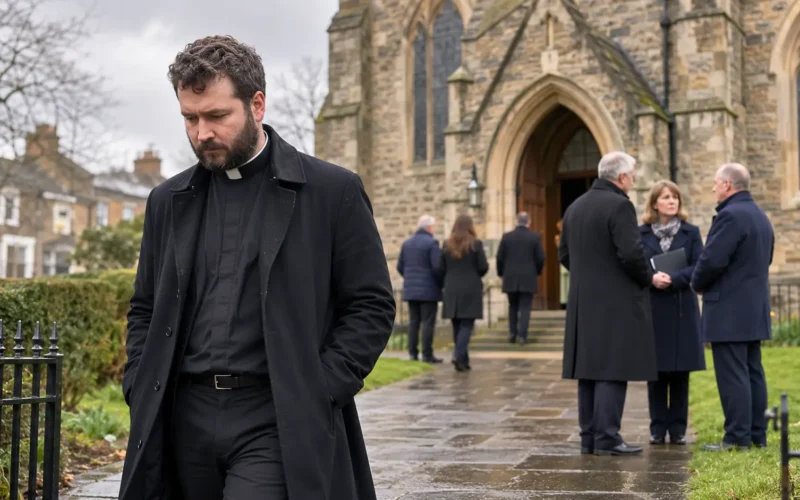
The Sam McNally-Cross London vicar tribunal concluded with the priest being removed from his Kensal Town parish and prohibited from ministry for five years after two allegations of clergy misconduct were upheld.
The Revd Samuel Cross, who has also been known publicly as Sam McNally-Cross, had served as Vicar of St Thomas with St Andrew and St Philip in Kensal Town since 2017. A Bishop’s Disciplinary Tribunal found that he had entered a sexual relationship with a woman who was living at the vicarage while he was still legally married.
The panel also found that the relationship continued in an inappropriate form after his divorce and that proper professional and pastoral boundaries were not maintained.
However, an additional allegation that he had behaved towards the complainant in a coercive and controlling manner was dismissed. That distinction is important when describing the outcome accurately.
What Happened in the Sam McNally-Cross London Vicar Tribunal?
 The case arose from a complaint submitted on 29 November 2024 by a woman identified in the published determination only as “Person A”.
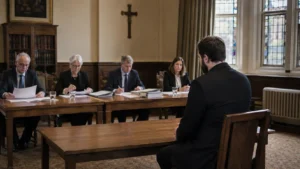
On 18 June 2025, the Deputy President of Tribunals referred three allegations for consideration by the Bishop’s Disciplinary Tribunal for the Diocese of London.
The allegations were that:
- Cross had engaged in a sexual relationship with Person A between approximately October 2021 and January 2023 while he was still legally married.
- After January 2023, he had continued an inappropriate relationship and failed to maintain proper professional or pastoral boundaries.
- Between approximately October 2021 and January 2024, he had behaved towards Person A in a coercive and controlling way.
After examining oral testimony, witness statements, photographs and extensive digital communications, the tribunal upheld the first two allegations but dismissed the third.
The panel’s findings and reasoning are recorded in the Church of England’s official misconduct determination.
What Penalty Was Imposed on the London Vicar?
The tribunal ordered that Cross be:
- Removed as incumbent of St Thomas with St Andrew and St Philip, Kensal Town.
- Subject to a limited prohibition from ministry for five years from 16 June 2026.
A limited prohibition prevents a member of the clergy from exercising ordained ministry for the period specified by the tribunal. It is different from a lifetime prohibition, but it represents one of the most serious sanctions available under the Church’s disciplinary system.
The panel explained its reasoning in a separate determination on the appropriate penalty.
Tribunal outcome at a glance
Who Was the Complainant in the Tribunal Case?
The complainant has not been publicly named and is referred to as Person A throughout the tribunal determination.
She began living as a lodger at the Kensal Town vicarage in August 2021. She was initially a university student and was later baptised in the parish in December 2021 and confirmed in June 2022.
In September 2022, she became an apprentice children’s worker employed by the Diocese and working within the parish. She left that position during spring 2024.
These overlapping arrangements were central to the tribunal’s consideration of the case. At different points, Cross occupied several positions in relation to Person A: priest, landlord, romantic partner, workplace supervisor and line manager.
The panel concluded that these roles created a serious imbalance of responsibility and made clear professional boundaries particularly important.
Questions about power, vulnerability and institutional responsibility also arise in wider local cases. London Local has previously covered safeguarding concerns being examined in Brent, including the importance of creating environments in which people feel able to report concerns without fearing adverse consequences.
Why Were the Professional Boundaries Considered Inappropriate?
The tribunal considered the relationship inappropriate from an early stage because Cross was the parish priest and Person A was a student lodger living in his home.
The situation became more complex when she began working in the parish. Cross then held responsibility for supervising her employment while also maintaining a private relationship with her.
The tribunal found that members of the Parochial Church Council, churchwardens and other relevant people within the Church were not properly informed about the relationship.
This prevented the parish from assessing the conflict of interest, introducing independent supervision or taking steps to protect appropriate workplace and pastoral boundaries.
The Church of England’s professional conduct guidance for clergy explains that clergy must recognise the power attached to their role and exercise particular care when pastoral, personal and professional relationships overlap.
What Evidence Did the Tribunal Consider?
 Digital communications played a major role in the case.
The tribunal examined approximately 1,000 pages of WhatsApp messages covering much of the relationship. It also considered Snapchat messages, photographs, oral testimony and communications involving other individuals.
Cross disputed that the relationship had been sexual. He argued that he had avoided answering sexual messages through WhatsApp because he believed such matters should be discussed in person.
The tribunal rejected that explanation. It found that the contemporaneous messages, photographs and Snapchat material supported Person A’s account of a sexual relationship.
The panel described the parties’ oral accounts as directly contradictory. It ultimately accepted the complainant’s evidence about the sexual nature of the relationship and found that Cross had not been truthful in his written and oral evidence on that issue.
Digital records can be particularly influential in disciplinary proceedings because they provide a contemporaneous account rather than relying entirely on memories reconstructed several years later.
Was the Coercive and Controlling Behaviour Allegation Proven?
No. The tribunal dismissed the allegation that Cross had behaved in a coercive and controlling manner.
Although the panel accepted Person A’s evidence that a sexual relationship existed and found significant failures involving professional boundaries, it did not conclude that the evidence met the civil standard of proof for coercive and controlling conduct.
The tribunal applied the balance of probabilities, meaning it considered whether each allegation was more likely than not to have occurred.
It is therefore inaccurate to report that every allegation made against Cross was upheld. Two misconduct allegations were proven, while the allegation concerning coercive and controlling behaviour was not.
This distinction is essential for fair and legally responsible reporting.
Was This a Criminal Trial or an Employment Tribunal?
No. The proceedings were neither a criminal prosecution nor an employment tribunal case.
They were conducted by a Bishop’s Disciplinary Tribunal under the Clergy Discipline Measure 2003, which provides the formal disciplinary framework for Church of England clergy.
The tribunal’s responsibility was to decide whether the alleged conduct amounted to ecclesiastical misconduct and, where misconduct was established, what Church penalty should follow.
The case did not result in a criminal conviction. The tribunal also did not apply the criminal standard of proof, which requires an allegation to be proven beyond reasonable doubt.
Its findings concerned whether Cross’s conduct was unbecoming or inappropriate to the office and work of a clerk in Holy Orders.
What Aggravating Factors Did the Tribunal Identify?
The panel considered several factors that increased the seriousness of the misconduct.
The sexual relationship lasted for approximately 15 months while Cross remained legally married. Although he and his former wife had separated in October 2021, their divorce was not finalised until 20 January 2023.
The relationship with Person A then continued privately until January 2024.
The tribunal also highlighted the power imbalance. Person A was initially a student lodger and was described during the proceedings as someone with mental-health vulnerabilities. Cross was an established parish priest who provided her accommodation and later supervised her work.
The covert nature of the relationship was another aggravating factor. Relevant parish officers were not told about it even after Person A became an employee working within the church.
The panel also considered the psychological harm Person A said she experienced before and after the relationship ended.
Did the Tribunal Consider Any Mitigating Circumstances?
 Yes. The tribunal considered evidence presented on Cross’s behalf before determining the penalty.
It took account of his own history of mental-health difficulties, his previous good character and supportive references describing him as an effective parish priest serving a challenging and economically disadvantaged community.
The tribunal also recognised that the relationship was unlikely to have caused the breakdown of his marriage because Cross and his former wife had already separated. It did not involve another person’s marriage, and no children were directly affected.
Information about the parish and its community role remains available through the Church of England’s local parish directory.
However, the tribunal concluded that the mitigating evidence did not outweigh the seriousness of the proven misconduct.
Why Did the Tribunal Impose a Five-Year Prohibition?
The tribunal was particularly concerned about what it regarded as Cross’s lack of insight and remorse.
It noted that he had denied the sexual relationship throughout the proceedings and that Person A had consequently been required to give evidence about highly personal matters.
The Acting Bishop of London had reportedly considered a three-year prohibition appropriate. The tribunal decided that a longer period was necessary because Cross had not admitted the conduct ultimately found proven.
Its penalty decision stated that a prohibition from ministry, rather than a lesser sanction, was required to reflect the seriousness of the case.
The panel stopped short of imposing a lifetime prohibition. It accepted that Cross might eventually be capable of returning to public ministry, but only after an extended period of reflection accompanied by suitable pastoral support, training and evidence of meaningful remediation.
The five-year period does not provide an automatic guarantee that Cross will return to ministry when it expires. Any future appointment would still be subject to the Church’s safeguarding, disciplinary and licensing processes.
What Happens to the Kensal Town Parish Now?
The tribunal’s order removed Cross from his position as vicar, creating a vacancy in the parish.
Responsibility for immediate pastoral and administrative arrangements would normally pass to the Diocese of London, the relevant archdeacon, churchwardens and other parish officers. Temporary clergy cover may be arranged while decisions are made about longer-term leadership.
The parish itself continues as a Church of England community despite the removal of its incumbent. Congregations are separate from the disciplinary conduct of an individual priest and may require pastoral support, transparent communication and stable interim leadership following such a decision.
Readers can follow other developments affecting communities across London as councils, public bodies, charities and local institutions respond to questions of governance, safeguarding and accountability.
Why Does the Sam McNally-Cross Tribunal Matter?
The case demonstrates how personal, pastoral, housing and employment relationships can become dangerously blurred when one individual holds several positions of authority.
A parish priest who is simultaneously a landlord and line manager possesses considerable influence over a person’s housing, spiritual life and employment. Even where a relationship is described as consensual, those overlapping roles can produce conflicts of interest and a substantial power imbalance.
The tribunal’s decision also shows the importance of informing churchwardens, safeguarding officers and other responsible officials when a personal relationship creates a conflict with ministerial or managerial duties.
It further illustrates the growing role of digital evidence. The large volume of WhatsApp and Snapchat material allowed the tribunal to examine how the relationship developed over time and compare the parties’ later accounts with messages written during the events themselves.
Final Perspective
The Sam McNally-Cross London vicar tribunal resulted in a serious disciplinary penalty after the panel found that a priest had entered a sexual relationship with a lodger while still legally married and had failed to maintain appropriate boundaries as her priest, landlord and workplace supervisor.
The tribunal did not uphold the separate allegation of coercive and controlling behaviour, and responsible accounts of the case should make that clear.
Cross was removed from his Kensal Town parish and prohibited from ministry for five years. The decision underlines the responsibility placed on clergy to recognise power imbalances, disclose conflicts of interest and maintain clear boundaries when pastoral care, accommodation, employment and personal relationships intersect.
Frequently Asked Questions
Who is Sam McNally-Cross?
Sam McNally-Cross, referred to in the tribunal documents as the Revd Samuel Cross, served as Vicar of St Thomas with St Andrew and St Philip in Kensal Town, west London, from 2017.
What did the tribunal find against Sam McNally-Cross?
The tribunal found that he engaged in a sexual relationship with a lodger while still legally married and later failed to maintain appropriate professional and pastoral boundaries.
Was every allegation upheld?
No. The allegations concerning the sexual relationship and boundary failures were upheld. The allegation of coercive and controlling behaviour was dismissed.
What punishment did the London vicar receive?
He was removed from his parish office and prohibited from ministry for five years from 16 June 2026.
Was Sam McNally-Cross convicted of a criminal offence?
No criminal conviction resulted from this tribunal. It was an ecclesiastical disciplinary process conducted under Church of England rules.
Can he return to ministry after five years?
The limited prohibition lasts five years, but its expiry does not necessarily guarantee an immediate return to ministry. Any future role would remain subject to the Church’s licensing, safeguarding and appointment requirements.