



Table of Contents Show
London E-Bike Obstruction Crackdown: What Is Happening?
The London e-bike obstruction crackdown is a growing enforcement push against dockless rental e-bikes left in places that block pavements, dropped kerbs, crossings, doorways, bus stops, cycle lanes and other public access routes.
This is not a full ban on rental e-bikes. London authorities still recognise that dockless e-bikes can support cleaner, flexible and active travel. The crackdown is mainly about where bikes are parked, who is responsible when they become an obstruction, and how councils can keep streets safe for pedestrians, disabled people, older residents, businesses and road users.
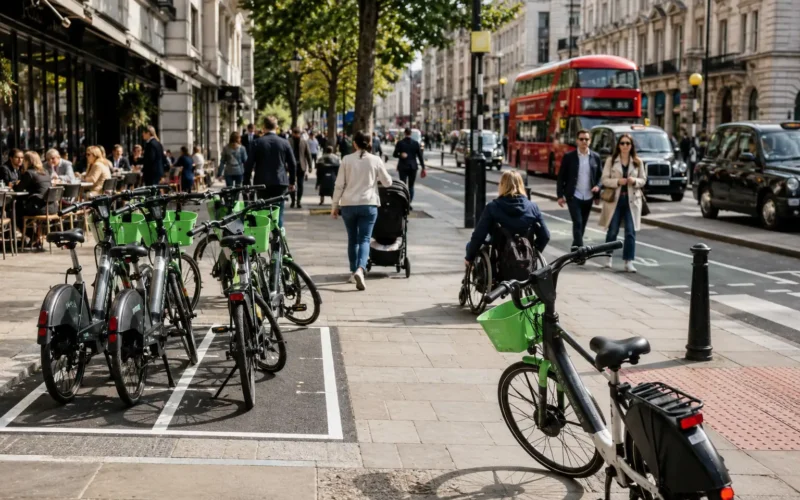
According to Westminster City Council’s dockless e-bike parking guidance, the council introduced more than 380 parking locations because dumped rental e-bikes were causing nuisance, hazards and accessibility problems on pavements. Westminster says riders now need to end trips in designated bays, while operators are expected to monitor and remove bikes parked outside those areas.
Why Is London Cracking Down on Badly Parked E-Bikes?
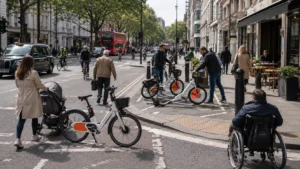
The main reason for the London e-bike obstruction crackdown is street safety and accessibility. A badly parked e-bike can look like a minor inconvenience, but it can create a serious barrier for wheelchair users, visually impaired pedestrians, older people, parents with prams and customers trying to enter local businesses.
Westminster Council says that with more than 3,000 dockless bikes in the city at any given time, it is challenging to keep pavements free from dumped bikes. The council specifically notes that some users block footways, making it hard for pedestrians, especially those with visual or mobility impairments. This is why Westminster introduced a mandatory parking bay scheme across the borough.
Transport for London also takes the same position. In its update on problematic parking of dockless e-bikes, TfL says dockless rental e-bikes and e-scooters are an important part of London’s transport network, but poor parking can create significant safety issues, particularly for disabled and older people.
What Does the Law Say About Highway Obstruction?
The legal basis for dealing with obstructive e-bikes comes mainly from highway obstruction law. Under Section 137 of the Highways Act 1980, a person who, without lawful authority or excuse, wilfully obstructs free passage along a highway can commit an offence. A pavement is usually part of the public highway, so an e-bike left across a footway, crossing point or dropped kerb can become a legal obstruction issue, not just a parking problem.
The law also covers items deposited on the highway. According to Section 148 of the Highways Act 1980, depositing anything on a highway in a way that interrupts a user of the highway can be an offence. This is relevant when rental bikes are left in a way that forces pedestrians into the road, blocks wheelchair access or creates a trip hazard.
Councils can also rely on removal powers. Under Section 149 of the Highways Act 1980, a highway authority may act where something deposited on a highway constitutes a nuisance or danger. This helps explain why councils can remove rental e-bikes that are considered dangerous, obstructive or hazardous.
What Has Westminster Council Done?
Westminster has become one of the most active councils in the London e-bike obstruction crackdown. The council has introduced more than 380 designated parking locations for dockless rental e-bikes, including physical bays and virtual bays. It says there is now at least one parking bay every 300 metres across the city, with more bays in high-demand central areas.
Westminster has also moved to direct enforcement against operators. In its official update, Westminster said it was issuing on-the-spot £100 fines to operators where rental e-bikes are left in ways that turn pavements into “obstacle courses”. The council said it wrote to Lime and Forest setting expectations, including rapid removal of obstructing bikes and stronger staffing in hotspot areas.
This means the enforcement pressure is not only on individual riders. Westminster is holding operators responsible for managing their fleets, clearing obstructive bikes quickly and preventing busy areas such as the West End from becoming overcrowded with badly parked bikes.
What Has Kensington and Chelsea Done?
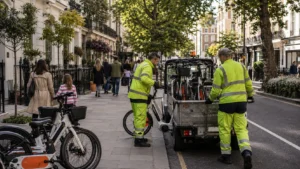
The Royal Borough of Kensington and Chelsea has also taken a tough enforcement approach. According to the council’s official update, more than 2,500 obstructive rental e-bikes had been removed from its streets since January 2025. The council said more than 1,200 e-bikes had been seized in 2026 alone, adding to 1,315 removed during 2025.
Kensington and Chelsea said total fees charged to rental firms had reached more than £210,000, with enforcement income reinvested into the service. The council also explained that bikes may be removed when they are lying across the highway, force pedestrians into the road, are likely to fall over, or create danger for drivers or pedestrians. It states that these removal criteria align with Section 149 of the Highways Act.
The council’s message is direct: rental e-bikes can help Londoners travel, but they cannot come at the expense of safe and accessible streets.
What Is TfL Doing About Dockless E-Bike Parking?
Transport for London has introduced a stronger approach for dockless e-bike and e-scooter parking on red routes and TfL land, including areas such as station forecourts and bus garages. In its official update, TfL said enforcement action would be taken against operators who do not ensure compliance with its parking policy.
TfL also says it has allocated almost £1 million to boroughs to fund 7,500 new parking spaces. This is important because the e-bike parking problem cannot be solved only by removing bikes. London also needs enough properly located parking spaces near stations, shopping areas, offices, hospitality venues and high-footfall streets.
The TfL Dockless Bike Share Code of Practice also states that dockless bike schemes must not cause nuisance or obstruction, must not restrict use of public roads or property, and operators may be treated as responsible for the use and deposit of bikes they own or manage. The code further says that where an obstruction occurs, the bike must be moved to a compliant parking space, and failure to comply may lead to removal, a formal warning, fixed penalty notice or prosecution.
What Does GOV.UK Say About E-Bike Rules?
The London e-bike obstruction crackdown focuses mainly on parking, but riders should also understand the wider legal rules for electric bikes. According to GOV.UK guidance on riding an electric bike, a legal electrically assisted pedal cycle, or EAPC, can be ridden by someone aged 14 or over and does not need to be registered, taxed or insured.
However, GOV.UK also states that an EAPC cannot be ridden on pavements. If an electric bike does not meet EAPC rules, it may be classed as a motorcycle or moped, which can require registration, tax, insurance, a valid licence and a helmet.
This distinction matters because London’s e-bike debate is not only about abandoned bikes. It also includes concerns about where e-bikes are ridden, whether they meet legal standards and whether operators have proper controls in place.
What About Rental E-Scooters?
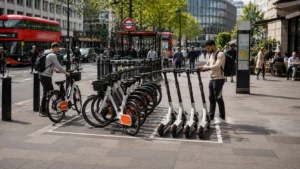
Some of the London crackdown also overlaps with rental e-scooters because they use similar parking bays in some areas. GOV.UK says rental e-scooters can only be used in official trial areas and must not be used on pavements. The GOV.UK rental e-scooter guidance also confirms that private e-scooter rules have not changed and that using a privately owned electric scooter on public land remains against the law.
This is why councils often discuss dockless e-bikes and rental e-scooters together when talking about parking bays, pavement obstruction and street clutter.
Why Does This Matter for Businesses?
The London e-bike obstruction crackdown matters to businesses because blocked pavements can affect customer access, deliveries, public safety and street appearance.
A restaurant, shop, hotel, clinic or office may not own the bikes left outside its premises, but customers may still experience the obstruction as part of the business environment. A blocked doorway can discourage footfall. A bike left across a dropped kerb can stop a wheelchair user or parent with a pram from passing safely. A cluster of rental bikes near an entrance can create a poor first impression.
Westminster’s guidance says the parking bay scheme is intended to make pavements safer and more accessible for people who live, work or visit the borough. For local businesses, this means the crackdown could support clearer entrances, safer high streets and better access for customers.
What Should Riders Do Now?
Riders should treat dockless e-bike parking rules as stricter than before, especially in central boroughs such as Westminster and Kensington and Chelsea.
Before ending a ride, riders should check the operator app, look for a marked or approved parking bay, and make sure the bike is not blocking:
- Pavements
- Dropped kerbs
- Crossings
- Tactile paving
- Shop entrances
- Office doorways
- Access ramps
- Bus stops
- Cycle lanes
- Bus lanes
- Taxi ranks
- Residential parking bays
According to Westminster Council, bikes are required to be parked in designated bays, and operators must monitor bays so bikes parked outside dedicated areas are identified and removed quickly.
What Should Operators Do?
 Operators need to manage bikes more actively because councils are increasingly treating poor parking as an operator responsibility, not only a rider mistake.
The TfL code of practice says operators should ensure dockless bikes do not cause obstruction and must be able to monitor and report the location of bikes in real time. It also says operators should use controls such as geofencing to prevent bikes being deposited in no-go areas, including around fire escapes or private land where there is no agreement.
Westminster and Lime also agreed a data-sharing deal in June 2026. According to Westminster City Council’s official announcement, the agreement allows the council and Lime to share real-time information about bike numbers and locations across Westminster. The aim is to improve parking capacity, manage bike distribution and respond faster to issues raised by residents and businesses.
For operators, this means the cost of poor parking is rising. Badly managed fleets can lead to fines, removals, storage charges, stricter agreements and reputational damage.
Is London Trying to Ban Rental E-Bikes?
No. The London e-bike obstruction crackdown is not a ban on rental e-bikes. It is a move toward stricter parking control, better fleet management and clearer operator accountability.
TfL says dockless rental e-bikes and e-scooters are an important part of London’s transport network and help people travel sustainably. However, TfL also says services must operate in a way that keeps streets safe and accessible for everyone.
Westminster makes a similar point. Its parking bay scheme aims to support access to dockless bike hire, encourage active travel and promote responsible bike use, while stopping bikes from blocking pavements.
What New Powers Are Coming?
A major reason the issue is changing is that national regulation is moving forward. According to GOV.UK’s announcement on the English Devolution and Community Empowerment Act, the Act introduces new licensing powers for rental e-bikes, allowing local authorities to set requirements on parking, safety and accessibility standards.
In Parliament, the Government also said it had recently legislated to improve the regulation of shared bike schemes and that powers under the English Devolution and Community Empowerment Act will allow rules to be set for hire schemes, including possible insurance requirements. Read the Hansard discussion on e-scooters and e-bikes.
This could eventually reduce the current patchwork of borough-by-borough rules and create a clearer London-wide framework for dockless rental e-bikes.
What Could Happen Next?
The next stage of the London e-bike obstruction crackdown is likely to include more parking bays, stronger geofencing, more data sharing, tougher operator agreements and wider use of fines or removals where bikes obstruct public space.
Councils already have powers under highway law to act against dangerous or obstructive bikes. TfL is also pushing for better compliance on red routes and TfL land. With new national legislation now creating licensing powers for rental e-bikes, London is moving toward a more formal system where operators may have to meet clearer parking, safety and accessibility standards.
For riders, the safest rule is simple: park only in an approved bay and leave clear space for pedestrians. For operators, the message is equally clear: manage fleets properly or face enforcement. For businesses, the crackdown could mean safer pavements, clearer entrances and better access for customers, staff and deliveries.
Final Thoughts
The London e-bike obstruction crackdown shows how the capital is trying to balance sustainable transport with safe and accessible streets.
Rental e-bikes can help reduce short car journeys, support commuters and give people more flexible travel options. But when they are left across pavements, crossings, ramps and entrances, they create real problems for pedestrians, disabled people, businesses and road users.
According to the Highways Act, highway obstruction and the deposit of items that interrupt public passage can become legal issues. According to TfL and local councils, dockless operators must manage their bikes so they do not create nuisance, danger or obstruction. According to GOV.UK, e-bike and e-scooter users must also follow the rules on where these vehicles can be used.
The future of rental e-bikes in London is therefore not about removing them completely. It is about making them work properly within the city’s streets parked in the right places, managed by responsible operators and used in a way that keeps pavements clear for everyone.