




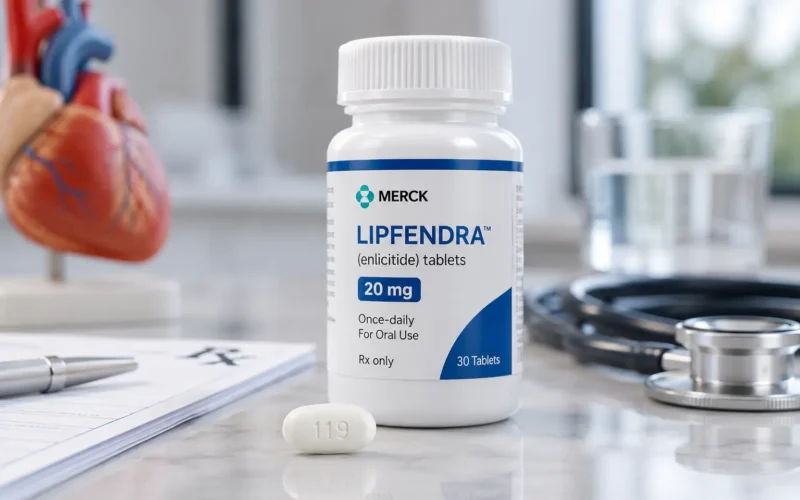
The US Food and Drug Administration has approved Merck’s Lipfendra, the first oral treatment designed to block the cholesterol-regulating protein PCSK9.
The once-daily prescription pill, also known by its generic name enlicitide, has been approved for adults with high levels of low-density lipoprotein cholesterol, commonly known as LDL or “bad” cholesterol. It is intended to be used alongside diet, exercise and other cholesterol-lowering treatments where appropriate.
PCSK9 inhibitors help the liver remove more LDL cholesterol from the bloodstream. Until now, medicines targeting this protein have generally been administered through injections, making Lipfendra a potentially more convenient option for patients who need additional treatment beyond statins.
Late-stage clinical trials involving patients with hypercholesterolaemia found that the medicine reduced LDL cholesterol by nearly 60% compared with placebo. One large trial involving 2,904 participants reported a placebo-adjusted LDL reduction of approximately 56% after 24 weeks.
The FDA granted the treatment Priority Review, a process used for medicines that may offer significant improvements in the treatment or prevention of serious conditions.
However, Lipfendra has not yet been proven to prevent heart attacks, strokes or cardiovascular deaths. Merck is continuing a separate outcomes trial to determine whether its effect on cholesterol translates into fewer major cardiovascular events.
The drug must be taken on an empty stomach, with patients required to wait before eating. Merck is expected to launch it in the United States within weeks at a list price of around $315 for a 30-day supply, although insurance coverage and discounts may reduce patients’ actual costs.
The approval applies to the United States. Availability in Britain would require separate authorisation from the Medicines and Healthcare products Regulatory Agency.