


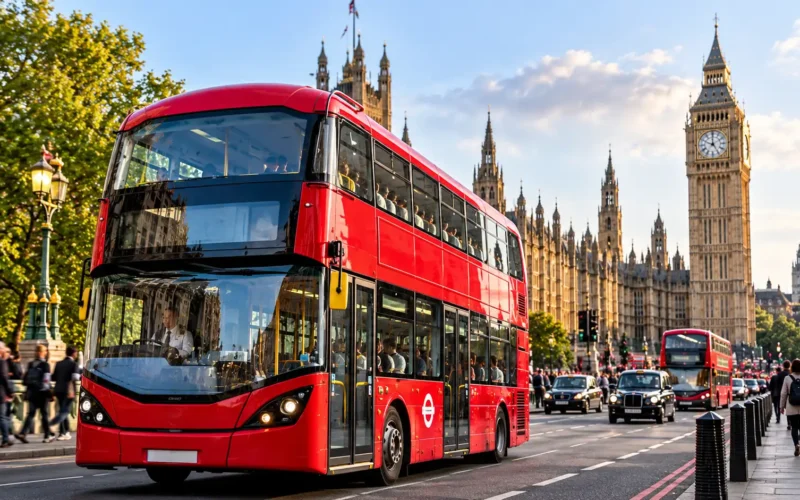
The London buses public ownership debate has moved from political discussion to a real-world test after Transport for London confirmed that Route 6 will become the first service operated by its new publicly owned bus company.
Route 6, running between Willesden and Victoria station, is due to become the first route under Buses for London when the operator launches in late 2027. Four more routes are expected to be named over the coming year and brought into the publicly owned operation from 2028.
It is a significant change in how part of London’s bus network will be operated, but it is not a wholesale nationalisation of the capital’s buses.
TfL currently plans the network, determines routes and service requirements, sets fares and awards operating contracts to private bus companies. Almost 700 routes are currently operated through contracts involving eight privately owned companies.
Buses for London will instead allow TfL to become an operator itself on selected routes, giving the transport authority a chance to compare direct public operation with the existing contracted model.
That distinction is at the centre of the debate now developing around the announcement.
Why Has Route 6 Become the First Test of Publicly Owned London Buses?
Route 6 connects Willesden with central London and Victoria, travelling through areas including Kensal Green, Maida Vale, Marble Arch, Oxford Street and Trafalgar Square.
From late 2027, it is expected to become the first practical test of whether TfL can operate services directly while delivering the reliability, safety, employment standards and financial performance it wants from the network.
The new operator’s first base will be at Park Royal in west London. The depot is being developed with the Old Oak and Park Royal Development Corporation and is expected initially to support around 100 zero-emission buses. The site is currently planned for use until 2033, ahead of wider redevelopment in the Old Oak area.
TfL director of buses Lorna Murphy described the announcement as an “exciting new chapter” and said the company would allow TfL to explore how direct public ownership could support the future of London’s bus network.
The environmental element is also significant. TfL has been expanding its zero-emission fleet for several years, and the Park Royal base is intended to support another generation of electric buses.
The announcement also puts the transport policies of Mayor of London Sadiq Khan back under scrutiny. His record has included the Hopper fare, bus and tram fare decisions, ULEZ expansion and investment in new transport infrastructure. His wider record and current mayoral term are examined in more detail in coverage of why Sadiq Khan is still Mayor of London.
Khan said the new operator offered an opportunity to examine whether the bus network could provide better value, support climate targets, improve road safety and work more effectively for both passengers and drivers.
However, the announcement does not mean passengers on hundreds of other London routes will suddenly see their private operators replaced.
The initial programme covers Route 6 and four further routes from 2028. What happens beyond those routes is likely to depend heavily on the evidence gathered from the first years of operation.
Why Is Public Ownership of London Buses Dividing Opinion?
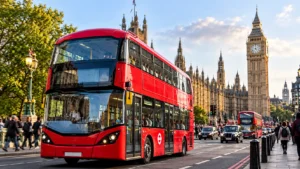 Supporters of Buses for London argue that direct operation could give TfL greater control over how money is spent and how services are managed.
Under the existing system, TfL specifies the service but private companies employ drivers, provide vehicles and carry out day-to-day operations under contracts.
A publicly owned operator changes that relationship.
TfL says greater direct control could allow it to test new approaches to reliability, safety and working practices, while money generated through the operation could be reinvested in London’s transport network rather than distributed to private shareholders.
Trade union Unite has strongly supported the change.
General secretary Sharon Graham said the union had long called for London’s bus services to move towards public ownership, arguing that outsourcing had produced poor outcomes for some workers and passengers.
The union will also be watching what Buses for London means for driver pay, conditions, rostering and workplace standards.
Those employment questions matter because transport staffing has become an increasingly visible issue across the capital. Industrial disputes elsewhere on the TfL network have demonstrated how staff conditions can quickly become a passenger issue when services are disrupted. London buses, for example, have frequently carried additional passengers during periods of London Underground strike disruption.
But private bus operators and their representatives dispute the argument that ownership is the main problem facing London’s bus network.
The Confederation of Passenger Transport has argued that congestion and slow journey times should receive greater attention. Its chief executive Graham Vidler said passengers primarily need “faster, more reliable journeys”, while warning that taxpayers could carry more financial risk under public operation.
The organisation has also pointed to investment already made by private bus companies in vehicles and technology. Vidler warned that uncertainty over the future operating model could make some companies more cautious about committing further investment.
CPT also cited the speed of London’s buses as evidence that changing the operator alone cannot solve every problem, saying buses typically travel at around 9mph in the capital.
That raises one of the most important questions in the London buses public ownership debate.
If a bus is delayed because of congestion, roadworks, traffic collisions or limited bus priority, changing the company operating it will not automatically remove those obstacles.
Public ownership could change management structures and where operating surpluses go, but the performance of the service will still depend on road conditions, bus lanes, staffing, vehicle availability and the way London’s streets are managed.
This is why the first routes are likely to be closely watched for more than simply whether TfL can run buses itself.
Passengers will ultimately be able to compare factors such as waiting times, cancellations, journey reliability and vehicle standards. Drivers and unions will be interested in pay, working conditions and staffing arrangements. TfL will also need to examine operating costs and whether direct operation delivers better value than competitive contracting.
The financial comparison may prove especially important.
London’s current model is different from the deregulated system historically used in many other parts of England. TfL already exercises substantial public control because it decides what services are required and then contracts companies to provide them.
Buses for London therefore represents a change in the operator, rather than TfL suddenly gaining control over a network it previously did not manage.
London’s buses have largely been privately operated for around three decades, although TfL directly managed some services between 2000 and 2009 before those operations returned to private ownership.
The new company means that, from late 2027, both models will effectively exist alongside each other.
That creates an unusually clear opportunity for comparison.
Route 6 and the four routes following it can be measured against similar privately operated services. TfL will be able to study whether the public operator changes costs, staff retention, service performance, investment or passenger experience.
For Londoners, there should be relatively little immediate change before the launch. Route 6 continues to operate under the existing system, while Buses for London is being established ahead of its planned late-2027 start.
The bigger unanswered question concerns what happens after the first five routes.
TfL has presented Buses for London as an opportunity to explore a different model rather than announcing that all of London’s bus routes will transfer into public operation. Earlier City Hall statements similarly described the project as work to examine whether municipal operation could improve innovation, efficiency, accountability, decarbonisation and outcomes for passengers and workers.
That means 2027 and 2028 could become crucial years in the debate.
If the first publicly operated routes demonstrate lower costs, stronger reliability or other measurable improvements, supporters are likely to make the case for expanding the model. If costs increase or services fail to outperform contracted routes, critics will have evidence to question whether direct ownership provides an advantage.
For now, Route 6 is the starting point rather than the final destination.
Its move between Willesden and Victoria may involve only one of almost 700 London bus routes, but it will provide the first practical evidence in years about how a directly operated TfL bus company performs alongside London’s established private contractors.