


Table of Contents Show
The latest RMT union London Underground strikes took place on Tuesday 2 June and Thursday 4 June 2026. As of 11 July 2026, neither Transport for London’s current strike information nor the RMT’s latest news announcements show another confirmed London Underground strike date.
The dispute has centred on proposals to introduce a voluntary four-day working pattern for Tube drivers. The RMT has raised concerns about longer shifts, fatigue, safety, staff allocation and work-life balance, while TfL says the arrangement would be voluntary and could improve reliability and flexibility.
London passengers should continue checking official updates because further industrial action could still be announced if negotiations fail to produce an agreement.
Key Points About the Rmt Tube Strikes
- The most recent Tube driver strikes were held on 2 and 4 June 2026.
- No new London Underground strike dates were listed as of 11 July 2026.
- The dispute concerns a proposed four-day working pattern for train operators.
- The RMT says the proposals create concerns about fatigue, safety and longer shifts.
- TfL says participation would be voluntary and drivers could remain on five-day patterns.
- Future industrial action remains possible unless the disagreement is resolved.
- Passengers should check official information rather than relying on older strike calendars.
Readers can follow our latest London transport updates for information about Tube closures, strikes, road disruption and changes affecting journeys across the capital.
Are Any RMT London Underground Strikes Currently Confirmed?
There are currently no newly announced RMT London Underground strike dates shown on the main TfL industrial action page or in the union’s latest published news updates.
This means passengers should not treat strike dates from March, April, May or June as upcoming action. Social media posts, older news reports and saved travel alerts may still show dates that have already passed or were subsequently suspended.
The absence of a new date does not necessarily mean that the wider disagreement has been permanently settled. Industrial disputes can remain active while talks continue, and unions can announce further action after providing the required notice.
Latest RMT Tube strike position
The safest approach is to use the live Tube and rail status service whenever a journey is time-sensitive. TfL’s strike page is useful for planned industrial action, while live status information shows operational disruption happening on the day.
When Did the RMT London Underground Strikes Take Place in 2026?
The 2026 dispute produced several rounds of proposed industrial action. Some dates were cancelled or suspended after talks, while strikes went ahead in April and June.
The RMT originally announced a wider programme of action in March. It said members opposed what the union described as the imposition of a compressed working week. The original programme included dates in March, April and May.
The March action was called off following progress in negotiations. Two strike periods then went ahead in April. Further walkouts planned for May were suspended shortly before they were due to begin, but new action was later held on 2 and 4 June.
Timeline of the 2026 dispute
Our earlier guide to the June Tube disruption and alternative routes provides more detail about the lines and services affected during the most recent walkouts.
Why Did RMT Members Strike on the London Underground?
The disagreement concerns proposals for a four-day working pattern for London Underground train operators.
According to the RMT’s official explanation of the dispute, members raised concerns about shift lengths, working-time arrangements, staff transfers, allocations, fatigue, safety and work-life balance.
The union has argued that reducing the number of working days does not automatically improve conditions if the remaining shifts become substantially longer or more demanding. It has also questioned how voluntary participation would work in practice and whether drivers who preferred existing arrangements would face indirect pressure to change.
TfL presents the proposal differently. It says the working pattern would be voluntary, drivers could continue working a five-day week and contractual hours would not be reduced. TfL has also said the change could improve staffing flexibility and service reliability without increasing operating costs.
The two sides therefore disagree not only about the proposed timetable but also about its likely practical consequences.
What Does Each Side Say?
TfL said in April that the initial proposal had been put to unions in March 2025 and that discussions included a pilot involving Bakerloo line train operators. The transport authority continued to describe the change as voluntary, while the RMT maintained that important operational questions had not been satisfactorily answered.
Is the Dispute Really About a Four-day Working Week?
The phrase “four-day week” can make the proposal sound straightforward, but the disagreement involves more than the number of days appearing on a roster.
A conventional reduction in the working week might mean fewer total hours. A compressed working arrangement usually means working similar contractual hours over fewer but longer days. The details of start times, shift duration, rest periods, weekend requirements and advance notice can therefore become extremely important.
For drivers operating passenger trains in a safety-critical environment, fatigue management is a significant part of roster design. Early starts, late finishes, changing shift patterns and insufficient recovery time can affect how employees experience a compressed schedule.
TfL argues that a properly designed voluntary arrangement can give participating drivers an additional day away from work. The RMT’s concern is that the benefit of the extra day could be undermined by the length and structure of the remaining shifts.
This is why the disagreement has continued even though both sides may agree in principle that workers value more predictable time away from work.
What Happened During the June 2026 Tube Strikes?
The June action caused significant but uneven disruption across the London Underground.
On Thursday 4 June, no service was expected on the Circle and Piccadilly lines. Central sections of the Metropolitan and Central lines were also badly affected, while the Bakerloo, District and Northern lines experienced severe delays.
However, the strike did not close the entire Underground network. TfL reported that approximately 60 per cent of drivers worked during the first June strike. The Jubilee line operated close to 90 per cent of its normally scheduled kilometres, demonstrating that the effect could vary considerably from one line to another.
Tube journeys fell substantially, but passenger use increased on buses, the London Overground and the Elizabeth line. TfL also said that total Oyster and contactless taps across the transport network were only around 10 per cent lower than usual, suggesting that many passengers changed routes rather than abandoning their journeys.
How Were Different Services Affected?
This uneven service pattern explains why passengers should never assume that “Tube strike” means every line and station will close. It also means that seeing one line operating does not guarantee that an entire journey will be possible.
Interchange stations can become overcrowded, trains may terminate early and services can change at short notice according to the number and location of staff available.
Which Tube Lines Could Be Affected by Future RMT Strikes?
The exact impact of any future RMT union London Underground strikes would depend on which employees are called to take action and where those employees normally work.
During the 2026 driver dispute, effects varied because drivers are assigned to particular depots and lines. Union membership is also distributed differently across the Underground network. Some lines may therefore operate a relatively frequent service while others face long gaps or complete suspension.
Potentially affected lines include:
This table is not a forecast of future closures. It reflects the types of disruption seen during earlier action. TfL normally publishes a more detailed line-by-line forecast shortly before confirmed strike dates.
Passengers should also check our updates on planned Tube works and weekend closures, because engineering work can affect alternative routes even when no strike is taking place.
Will the Elizabeth LINE Run During an RMT Tube Strike?
The Elizabeth line is not part of the London Underground, so a strike involving only Tube drivers would not automatically stop Elizabeth line services.
During the April and June 2026 action, TfL expected the Elizabeth line to operate normally. However, it became considerably busier because passengers used it as an alternative to Underground routes.
The Elizabeth line can be particularly useful for journeys involving:
- Heathrow
- Paddington
- Bond Street
- Tottenham Court Road
- Farringdon
- Liverpool Street
- Canary Wharf
- Stratford
- Abbey Wood
Passengers should remember that some Elizabeth line stations connect with Underground stations. Entrances, platforms and surrounding areas can therefore become crowded even when Elizabeth line trains are operating.
Separate operational incidents, engineering work or industrial action involving another group of workers could also affect the service. “Not directly affected by the Tube strike” should not be interpreted as a guarantee that every train will run normally.
Will London Overground, the DLR and Buses Continue Running?
London Overground, DLR and most bus services normally continue operating when industrial action is limited to London Underground drivers.
These services can absorb some displaced passengers, but they do not have unlimited capacity. Busy routes may become crowded from early in the morning, especially around major interchange stations such as Stratford, Canada Water, Highbury & Islington, Whitechapel, Liverpool Street and Clapham Junction.
Bus journey times may also increase. When more passengers switch to buses, boarding takes longer and services become crowded. Additional taxis, private cars and delivery vehicles can increase congestion on London roads.
For journeys through outer London, express bus services can offer useful connections that avoid Zone 1. For example, passengers travelling between south London and Heathrow can consider the Superloop connection from Croydon to the airport when it suits their starting point and available travel time.
How Should Passengers Plan Journeys During a Tube Strike?
A reliable strike-day plan should not depend on one specific train or interchange.
Passengers should begin by checking the official TfL journey-planning tools and identifying at least one realistic alternative. The backup journey should use a different transport mode where possible, rather than simply changing from one Underground line to another.
For example, a passenger might use National Rail for the longest part of the journey, walk between two nearby central London stations and complete the final section by bus.
A practical journey-planning method
Passengers using mainline rail services should also check National Rail disruption updates. A Tube strike does not necessarily affect National Rail, but planned engineering work or unrelated incidents may reduce the usefulness of an alternative route.
How Can Commuters Reduce Disruption?
Commuters with flexible working arrangements may benefit from changing their travel time rather than changing their entire route.
Travelling before the morning peak can help, although some strike-day Tube services may start later than usual. Travelling after the peak may reduce crowding, but passengers should check whether services are expected to finish early.
Employers can also reduce pressure by allowing flexible starting times, remote working or meetings to be moved online. This may be particularly important for employees who depend on lines expected to have little or no service.
Workers who must travel should tell employers about likely delays in advance and retain evidence of official disruption notices where appropriate.
What Should Tourists Do During London Underground Strikes?
Visitors should avoid trying to follow a normal sightseeing itinerary without adjusting for the strike.
Many central London attractions are closer together than they appear on the Tube map. Walking between Westminster, Trafalgar Square, Covent Garden, Leicester Square, Soho and the South Bank can be more practical than waiting for several crowded transport connections.
Tourists should group attractions by area and avoid making repeated journeys across London. Hotel staff may also be able to suggest local bus routes or walking connections that are not obvious from the Underground map.
Anyone attending a timed attraction, theatre performance, concert or sporting event should leave considerably earlier than usual. Evening services can remain busy even after the main commuter peak because passengers who delayed their journeys begin travelling at the same time as event audiences.
How Could Airport Travel Be Affected?

Tube strikes can affect airport passengers even when airport rail services continue to run.
Heathrow passengers who would normally use the Piccadilly line may need to use the Elizabeth line, Heathrow Express, buses or another combination of services. The Elizabeth line is likely to become busier when the Piccadilly line is suspended.
Gatwick passengers may use National Rail services from Victoria, London Bridge, Blackfriars or St Pancras, depending on the service available. However, reaching the departure station can become more difficult when Underground connections are disrupted.
Stansted passengers may need to reach Liverpool Street or Tottenham Hale, while Luton passengers commonly connect through St Pancras or other Thameslink stations.
Airport travellers should avoid planning around the last possible connection. Check-in deadlines, luggage, station crowding and slower interchange times can turn a manageable delay into a missed flight.
Could More RMT Tube Strikes Be Announced?
Further RMT union London Underground strikes are possible, but no additional dates should be treated as confirmed until they are announced by the union and reflected in official passenger information.
The May action demonstrated how quickly the position can change. Two planned walkouts were suspended shortly before they were due to begin after TfL changed its position sufficiently for further discussions to take place. The union warned at the time that the dispute was not over and that more action could follow if talks failed to produce progress.
New strike dates were subsequently announced for 2 and 4 June, and those walkouts went ahead after negotiations failed to prevent them.
A future announcement would normally include:
- The employees or grades being called to strike
- The starting and finishing times
- The dates of the action
- The dispute connected with the action
- Any action short of a strike, such as overtime restrictions
Passengers should wait for these details before making major changes to travel or accommodation arrangements.
How Much Notice Will Passengers Receive?
Trade unions are generally required to give employers advance written notice before official strike action begins. However, passenger information may become more detailed only after TfL evaluates likely staffing levels and prepares a line-by-line service plan.
An initial union announcement may confirm the dates without explaining exactly which Tube services will operate. TfL can then publish more detailed forecasts closer to the action.
Strikes can also be suspended at short notice if negotiations progress. Passengers should therefore check twice: once when planning the journey and again immediately before travelling.
General information about the legal process surrounding industrial action is available in the Acas guidance on strikes.
What is the Difference Between RMT and ASLEF?
RMT and ASLEF are separate trade unions representing workers across the railway and transport industries.
The RMT represents a broad range of employees, including drivers, station staff, engineering workers, maintenance teams, control staff and other operational grades.
ASLEF primarily represents train drivers. Membership among London Underground drivers is divided between the two unions, which can result in different positions being taken on the same proposal.
During the 2026 four-day working-pattern dispute, ASLEF supported the principle of the new arrangement while the RMT opposed the way it was being developed and introduced. This difference contributed to the uneven impact of the strikes because not every driver took part in the RMT action.
Passengers should check which union has announced action rather than assuming every rail or Tube strike involves the same workers.
What Have the 2026 Strikes Shown About London’s Transport Network?
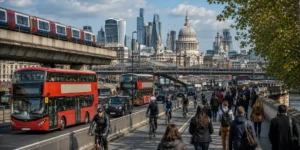
The April and June walkouts showed that London’s transport network can continue operating during partial Tube industrial action, but the disruption is redistributed rather than eliminated.
When Tube services are reduced, the Elizabeth line, Overground, buses, National Rail and roads experience additional pressure. A strike affecting one part of the system can therefore lengthen journeys across the wider city.
The June figures also showed that service impact depends heavily on staff participation. Some lines operated substantial services, while others experienced complete or partial suspension.
For passengers, this means broad headlines such as “London Tube strike” are not detailed enough for journey planning. The relevant questions are which workers are striking, which lines they operate, what time the action begins and whether the alternative route has enough capacity.
What Should Londoners Do Now?
There is no newly confirmed RMT London Underground strike date listed as of 11 July 2026. Passengers can therefore continue planning normal journeys, while checking separately for engineering work, station closures and everyday operational disruption.
However, the working-pattern disagreement has generated several rounds of industrial action during 2026, and a final publicly announced settlement has not been identified. Further action cannot be ruled out.
Londoners should use the official TfL strike page, live service status and RMT announcements as the primary sources of information. Older articles and social media posts should always be checked against the current date.
The most practical approach is simple: confirm whether action is officially announced, check the expected effect on the specific line and prepare a second route before leaving home.
Final Update
The RMT union London Underground strikes held in April and June 2026 caused reduced services, station crowding and pressure on alternative transport across London. The action formed part of an ongoing disagreement about proposed working patterns for Tube drivers.
As of 11 July 2026, no additional RMT Tube strike date has been publicly confirmed. London passengers should avoid relying on old strike calendars and continue checking current TfL and union information whenever future industrial action is reported.
FAQs
Are there any RMT Tube strikes planned for July 2026?
No new RMT London Underground strike date was listed on TfL’s main strike page or the RMT’s current news feed as of 11 July 2026. Passengers should check again before travelling because new action can be announced later.
When were the most recent RMT London Underground strikes?
The most recent strikes took place on Tuesday 2 June and Thursday 4 June 2026.
Why did RMT Tube drivers strike?
The dispute concerned a proposed four-day working pattern. The RMT raised concerns about shift duration, fatigue, safety, allocations and whether the arrangement would be genuinely voluntary. TfL said the option would be voluntary and could improve flexibility and reliability.
Did every Tube line close during the strikes?
No. The effect varied between lines. Some services were suspended, some operated only on certain sections and others ran reduced or relatively frequent services.
Will the Elizabeth line operate during a Tube strike?
It normally continues operating when the action involves only London Underground drivers, although it may become much busier. Separate incidents or industrial action can still affect it.
Will buses operate during an RMT Tube strike?
Most buses normally continue operating, but they can become crowded and delayed by heavier road traffic.
Can a Tube strike be cancelled at the last minute?
Yes. Planned action can be suspended when negotiations make progress. The RMT walkouts scheduled for May 2026 were suspended shortly before they were due to begin.
Where should passengers check for confirmed strike dates?
Passengers should check TfL’s strike information, live transport status, TfL Go and official RMT announcements.
Could disruption continue after a strike ends?
Yes. Trains and employees may need to be repositioned before a normal timetable can resume. Passengers should check early-morning services after an overnight or late-finishing strike.
Are RMT and ASLEF the same union?
No. They are separate trade unions. Both represent workers in the transport industry, but ASLEF mainly represents train drivers, while the RMT represents drivers and a wider range of operational employees.