




Table of Contents Show
The Prince Harry Daily Mail lawsuit has become one of the most closely watched media law battles in the UK, involving allegations of unlawful information gathering, privacy invasion, tabloid journalism and the long-running tension between the Duke of Sussex and parts of the British press.
At the centre of the case was not the Daily Mail newspaper as a standalone entity, but its publisher, Associated Newspapers Limited, also known as ANL. The company publishes the Daily Mail, The Mail on Sunday and MailOnline.
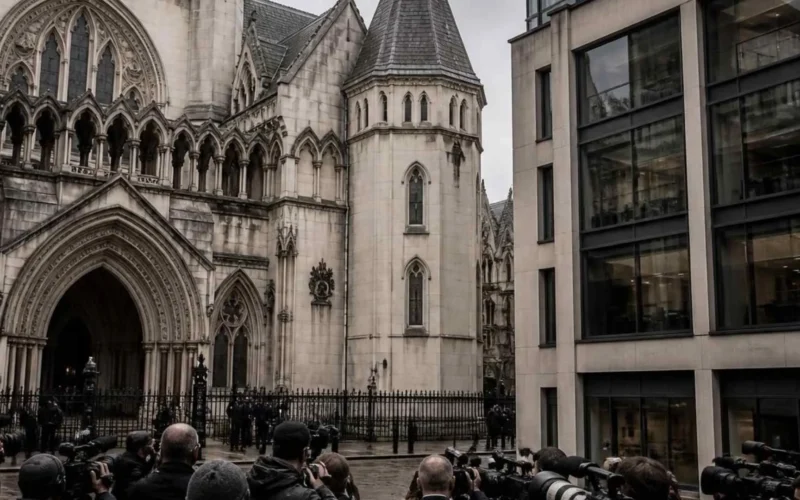
The latest major development came on 7 July 2026, when the High Court dismissed the privacy claims brought by Prince Harry and six other high-profile claimants. The official case was listed by the Courts and Tribunals Judiciary as Lawrence and others v Associated Newspapers Limited, with Prince Harry named as one of the seven claimants.
Quick Summary of the Prince Harry Daily Mail Lawsuit
What Was the Prince Harry Daily Mail Lawsuit About?
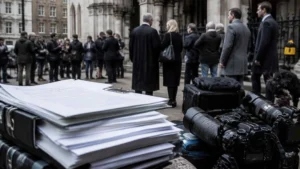 The lawsuit was part of Prince Harry’s wider legal campaign against sections of the British tabloid press. In this particular case, Harry and other claimants accused Associated Newspapers Limited of using unlawful methods to obtain private information for stories.
According to a detailed Reuters explainer on the case, the claimants alleged that journalists or people working on behalf of the Mail titles used unlawful tactics over many years. These alleged tactics included voicemail interception, landline tapping, obtaining confidential information by deception, and hiring private investigators.
Associated Newspapers denied the allegations throughout the case. The publisher strongly rejected the claims and argued that the stories at issue were based on lawful journalism, including legitimate sources such as friends, aides, publicists or other contacts.
Who Was Involved in the Lawsuit?
Prince Harry was one of seven claimants in the case. The full group included several public figures:
Baroness Doreen Lawrence, campaigner and mother of murdered teenager Stephen Lawrence, was the first named claimant. The other claimants were Elizabeth Hurley, Sir Elton John, David Furnish, Sir Simon Hughes, Prince Harry, the Duke of Sussex, and Sadie Frost.
The defendant was Associated Newspapers Limited, the publisher behind some of the UK’s most recognisable newspaper brands. The case therefore attracted attention not only because of Prince Harry, but also because it raised wider questions about privacy, evidence, press accountability and how far claimants can go when trying to prove historic media wrongdoing.
What Did Prince Harry Claim?
Prince Harry’s side argued that private information about him and people close to him had been obtained unlawfully and then used in articles.
His legal team alleged that the conduct was not isolated, but part of a broader culture of unlawful information gathering within the Mail titles. The allegations were serious because they involved claims about phone hacking, private investigators, deception and intrusive reporting.
However, allegations in a civil claim still need to be proved on the evidence. That became central to the outcome of the case. The court had to decide whether the claimants had enough reliable evidence to show that specific articles were probably produced using unlawful methods.
What Did Associated Newspapers Say?
Associated Newspapers denied the allegations and described them as false. The publisher maintained that the articles were produced through lawful reporting methods.
During the case, ANL argued that the claimants were asking the court to infer wrongdoing because some information was private and because the publisher could not always explain exactly how old stories had been sourced. The court ultimately found that this approach was not enough to prove the claim.
A report by AP News on the judgment explained that Mr Justice Nicklin rejected broad inferences used by the claimants and found there was a shortage of evidence to support the claims.
What Was the Latest Ruling?
 On 7 July 2026, the High Court dismissed the claims against Associated Newspapers Limited.
The judgment was a major legal defeat for Prince Harry and the other claimants. The court did not accept that the claimants had proved their allegations of unlawful information gathering against the publisher.
The ruling does not mean the court endorsed every historical tabloid practice or said privacy concerns were unimportant. Rather, the key point was evidential: the judge found that the claimants had not proved the claims they brought against ANL.
This distinction is important for readers. A dismissed claim means the court was not satisfied on the evidence. It does not automatically settle every wider public debate about the press, privacy or media ethics.
Why Did Prince Harry Lose the Daily Mail Case?
Prince Harry and the other claimants lost because the court found there was not enough evidence to prove their central allegations.
The judge rejected the idea that the court could conclude an article was unlawfully sourced simply because the information was private and because Associated Newspapers could not positively identify the source many years later.
That issue became one of the most important parts of the case. Historic media litigation often depends on documents, witness evidence, old invoices, editorial records and proof of how information moved from a source to a newsroom. Where those pieces are missing or uncertain, the court may decide that suspicion is not enough.
In simple terms, the claimants needed to prove more than the possibility of wrongdoing. They needed to prove that unlawful methods were probably used in relation to the claims being made.
How Does This Case Connect to Phone Hacking?
Many readers search for the Prince Harry Daily Mail lawsuit because they associate Harry’s legal battles with phone hacking.
Phone hacking refers to the unlawful interception of voicemail messages. It became a major UK media scandal after years of allegations involving tabloid newspapers. Prince Harry has brought separate legal claims against other media groups, and his wider campaign has often focused on alleged unlawful practices by newspapers.
This case against Associated Newspapers included allegations linked to phone hacking and other forms of unlawful information gathering. But it was different from some earlier phone-hacking litigation because the court found the evidence did not prove the claims against ANL.
That is why this judgment matters. It shows that even where a claimant has succeeded in other media cases, each lawsuit depends on its own evidence, its own articles and its own defendant.
Was This the Same as Prince Harry’s Mail on Sunday Libel Case?
No. There are two different legal matters that are often confused.
The 2026 case was a privacy and unlawful information-gathering claim against Associated Newspapers Limited. It involved several claimants and focused on allegations about how private information was allegedly obtained.
Separately, Prince Harry brought a libel claim over a Mail on Sunday article about his legal battle concerning UK police protection. That separate case was dropped in 2024. A report by Courthouse News Service explained that the libel claim involved an article about Harry’s efforts to retain publicly funded protection in the UK after stepping back as a working royal.
So, when people refer to the “Prince Harry Daily Mail lawsuit,” they may mean either the privacy case against Associated Newspapers or the earlier Mail on Sunday libel dispute. The most recent major development concerns the privacy case dismissed in July 2026.
Why Was the Lawsuit So Important?
 The lawsuit mattered for several reasons.
First, it involved Prince Harry, one of the most recognisable public figures in the world, taking direct legal action against a major UK newspaper publisher.
Second, it was part of a wider debate about privacy and press intrusion. Harry has repeatedly argued that aggressive media coverage affected his life, his family and his relationship with the royal institution.
Third, the case tested how historic allegations of unlawful journalism can be proved in court. Many of the alleged events were said to have happened years earlier, which made evidence, records and witness reliability especially important.
Fourth, the financial stakes were high. The legal costs linked to the case were reported to be extremely significant, and a further hearing was listed to deal with consequential issues after judgment.
What Happens Next After the Ruling?
After the dismissal of the claims, the next major issue is likely to be costs and any further legal steps.
In UK civil litigation, the losing side can often be ordered to pay at least part of the winning side’s legal costs, although the final amount depends on court orders and further hearings. A consequential hearing was listed after the judgment to decide what orders should follow.
It is also possible in major civil cases for parties to consider appeal routes, but an appeal should not be treated as confirmed unless it is formally announced or granted permission by the court.
For now, the confirmed position is clear: the High Court dismissed the claims against Associated Newspapers Limited on 7 July 2026.
What Does This Mean for Prince Harry?
For Prince Harry, the ruling is a significant setback in his long-running legal fight with the British tabloid press.
He has had some success in other media litigation, but this case produced a different result. The court found that the evidence did not prove the claims against Associated Newspapers.
The outcome may also shape public discussion around Harry’s approach to the press. Supporters may see the lawsuit as part of a broader campaign for accountability, while critics may argue that the judgment shows the limits of pursuing historic allegations without stronger direct evidence.
Either way, the case has reinforced one point: Prince Harry’s relationship with the British press remains one of the most contentious public issues surrounding the Duke of Sussex.
What Does This Mean for the Daily Mail Publisher?
For Associated Newspapers Limited, the ruling was a major legal victory.
The publisher had denied the allegations from the start and argued that the case was not supported by sufficient evidence. After the claims were dismissed, the judgment strengthened ANL’s position in this specific legal dispute.
However, the wider debate about press conduct, privacy and the treatment of public figures is unlikely to disappear. The case may be over at trial level, but the public conversation around tabloid ethics remains active.
Timeline of the Prince Harry Daily Mail Lawsuit
Why Are People Searching for “Prince Harry Daily Mail Lawsuit”?
 The keyword “Prince Harry Daily Mail lawsuit” is trending because it combines several public interests: the royal family, media ethics, privacy law, phone-hacking history and celebrity litigation.
Many readers want to know whether Harry won or lost. The answer is that he lost the latest major case against the Daily Mail publisher in July 2026. Others want to know whether this was about phone hacking, whether Elton John was involved, and whether the case was connected to Harry’s security disputes.
The simplest explanation is this: Prince Harry and six other claimants accused Associated Newspapers of unlawful information gathering, but the High Court dismissed the claims because the evidence did not prove the allegations.
Conclusion
The Prince Harry Daily Mail lawsuit ended in a major defeat for the Duke of Sussex and six other claimants when the High Court dismissed their privacy and unlawful information-gathering claims against Associated Newspapers Limited on 7 July 2026.
The case was important because it brought together royal controversy, media law, privacy rights and historic allegations about tabloid reporting practices. But the court’s decision turned on evidence. The judge found that the claimants had not proved that Associated Newspapers unlawfully obtained the information used in the articles at issue.
For Prince Harry, the ruling marks a serious setback in his wider campaign against the British tabloid press. For Associated Newspapers, it is a significant legal victory. For the public, it is another reminder that high-profile media lawsuits are not decided by headlines, suspicion or public debate, but by what can be proved in court.
Frequently Asked Questions
Did Prince Harry sue the Daily Mail?
Prince Harry sued Associated Newspapers Limited, the publisher of the Daily Mail, The Mail on Sunday and MailOnline. The case is often described as the Prince Harry Daily Mail lawsuit because of the publisher’s connection to the Daily Mail brand.
Did Prince Harry win the Daily Mail lawsuit?
No. In July 2026, the High Court dismissed the privacy and unlawful information-gathering claims brought by Prince Harry and six other claimants against Associated Newspapers Limited.
What was Prince Harry accusing the Daily Mail publisher of?
The claimants alleged unlawful information gathering, including claims linked to phone hacking, landline tapping, private investigators and deception. Associated Newspapers denied the allegations.
Was Elton John involved in the lawsuit?
Yes. Sir Elton John was one of the claimants, alongside Prince Harry, Baroness Doreen Lawrence, David Furnish, Elizabeth Hurley, Sir Simon Hughes and Sadie Frost.
Is this the same as Prince Harry’s security case?
No. Prince Harry’s UK security litigation is separate. The Daily Mail-related libel case involved reporting about his security dispute, but the 2026 Associated Newspapers case focused on alleged unlawful information gathering and privacy invasion.
Did Prince Harry drop a Daily Mail case before?
Yes. Prince Harry dropped a separate libel claim linked to a Mail on Sunday article in 2024. That case was separate from the 2026 privacy lawsuit.
Can Prince Harry appeal the ruling?
An appeal should not be assumed unless it is formally confirmed. In civil cases, a party usually needs permission to appeal. As of the latest confirmed position, the claims were dismissed by the High Court.