




Key Takeaways
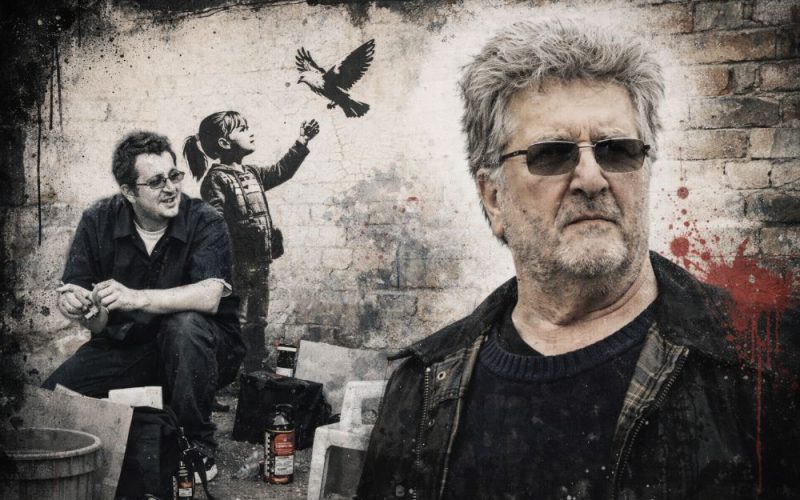
- Banksy is widely believed to be Robin Gunningham, based on the strongest evidence available in 2026.
- The artist has never officially confirmed his identity in public.
- The most cited evidence includes court records, travel data, and forensic art analysis.
- The alias David Jones was reportedly used to make identification more difficult.
- Banksy’s anonymity has helped protect both his legal position and his market value.
- Robert Del Naja remains part of the wider discussion, but current evidence points more strongly to Gunningham as the primary identity.
- Even after the 2026 unmasking claims, Banksy’s cultural influence and commercial appeal remain highly significant.
Banksy at a Glance
| Detail | Information |
|---|---|
| Known As | Banksy |
| Real Name | Widely believed to be Robin Gunningham |
| Alias | David Jones |
| Origin | Bristol, United Kingdom |
| Art Style | Stencil graffiti |
| Known For | Political street art |
| Active Since | 1990s |
| Identity Status | Unconfirmed but strongly evidenced |
For years, Banksy has operated as a shadowy figure in the art world producing politically charged street art that appears overnight and captures worldwide attention. Despite intense speculation, the artist has never publicly confirmed their identity.
However, based on accumulated evidence, the individual behind the Banksy persona is now widely accepted to be Robin Gunningham, a Bristol-born artist who has reportedly used the alias David Jones.
This guide explains what the 2026 findings reveal, how the identification was made, and why Banksy’s anonymity has remained so carefully protected.
What Did the 2026 Investigation Reveal About Who Banksy Is?
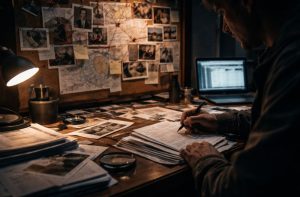 The 2026 investigation concluded that Banksy is most likely Robin Gunningham, based on consistent evidence from legal documents, geographic data, and artistic analysis.
The report did not rely on a single source. Instead, it combined multiple strands of evidence to form a cohesive picture.
Key Evidence Highlighted in the Report
- Legal Records: Early arrest and court documents linking Gunningham to graffiti activity
- Travel Patterns: Movements that closely match the timing and locations of Banksy artworks
- Forensic Analysis: Stylistic consistency in stencil techniques and thematic messaging
Why This Matters to Readers?
For someone unfamiliar with the topic, this investigation provides:
- A clearer understanding of Banksy’s origins
- A grounded explanation separating fact from speculation
- Insight into how investigative journalism can uncover hidden identities
Important Clarification
It is essential to distinguish between confirmed facts and conclusions:
- Banksy has not publicly confirmed being Robin Gunningham
- The identification is based on strong, widely accepted evidence, not direct admission
How Was Robin Gunningham Identified as Banksy?
Robin Gunningham was identified through a combination of historical records, alias tracking, and location-based analysis tied to Banksy’s artworks.
What Do the New York Arrest Records Reveal About Banksy?
In 2000, New York Police Department records documented the arrest of an individual connected to graffiti-related activity. These documents, signed under the name Robin Gunningham, have become a critical piece of evidence.
Investigators observed:
- Similarities between early graffiti styles and later Banksy works
- Geographic overlap between known locations of Gunningham and Banksy activity
- Consistency in artistic techniques
These records are considered one of the earliest documented links between Gunningham and the Banksy identity.
Why Did Banksy Use the ‘David Jones’ Alias?
In 2008, Gunningham reportedly adopted the name David Jones, one of the most common names in the United Kingdom.
This move appears to have been a deliberate strategy.
Key Reasons for Using the Alias
- To blend into public databases, making identification difficult
- To avoid detection by journalists and authorities
- To maintain anonymity while continuing global travel
This tactic significantly slowed investigative efforts and added another layer of complexity to identifying Banksy.
How Did Geo-Tagging Link Banksy to the Ukraine Murals?
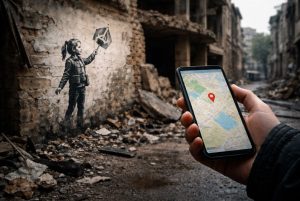 In 2022, Banksy created several murals in Borodyanka, Ukraine. These artworks appeared during a specific timeframe that investigators later cross-referenced with travel records.
The findings showed:
- Travel data linked to the alias “David Jones” aligned with mural appearances
- No conflicting records suggested the presence of another likely artist
- The style matched established Banksy techniques
This data-driven approach strengthened the argument that Gunningham and Banksy are the same individual.
Is Banksy Robin Gunningham or Robert Del Naja?
Banksy is widely believed to be Robin Gunningham, while Robert Del Naja is considered a close associate or collaborator rather than the primary artist.
The Robert Del Naja theory gained popularity due to his background in graffiti and connections to the Bristol art scene. However, evidence supporting Gunningham is significantly stronger.
The Leading Identity Theories Compared
| Feature | Robin Gunningham | Robert Del Naja (3D) |
|---|---|---|
| Primary Evidence | Court records, forensic analysis, 2026 investigation | Correlation with tour dates |
| Background | Bristol Cathedral School, illustrator | Musician, graffiti artist |
| Connection to Artworks | Direct travel and location matches | Indirect timing links |
| Current Status | Most widely accepted identity | Likely collaborator |
Why Has Banksy Stayed Anonymous for So Long?
Banksy has remained anonymous to protect against legal risks, preserve artistic freedom, and maintain the commercial value of his work.
Legal Protection
Graffiti is often considered vandalism under UK law. By staying anonymous, Banksy avoids:
- Arrest and prosecution
- Legal disputes over property damage
- Liability for unauthorised public art
Commercial Strategy
Banksy’s anonymity has become part of his brand. The mystery contributes to:
- Higher demand in the art market
- Increased media attention
- Greater cultural intrigue
The Role of Pest Control Office
Banksy’s works are authenticated through Pest Control Office, an official body that verifies artworks without revealing the artist’s identity.
This system allows Banksy to:
- Maintain anonymity
- Control authenticity
- Protect against forgery
“Banksy isn’t just a person; it’s a multi-million pound legal entity designed to protect the anonymity that fuels its market value.”
— Will Ellsworth-Jones
What Are Banksy’s Most Influential Works and What Do They Reveal?
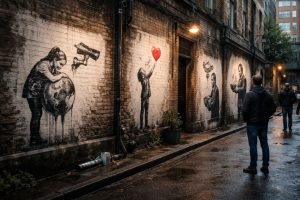 Banksy’s most influential works reflect themes of political critique, social justice, and the tension between anonymity and fame.
‘Girl with Balloon’ and the Shredding Incident Explained
This artwork became globally famous when it partially shredded itself during an auction in 2018.
What it revealed:
- A critique of the commercial art market
- Banksy’s ability to disrupt traditional systems
- The blending of performance and visual art
What Is the Meaning Behind the 2024 London Zoo Series?
The London Zoo-themed murals featured animals placed in urban environments.
Interpretations include:
- Environmental degradation
- Loss of natural habitats
- Commentary on confinement and control
What Does the 2026 Manchester ‘Identity’ Mural Suggest?
This mural appeared shortly after renewed discussions about Banksy’s identity.
It is widely interpreted as:
- A response to public obsession with unmasking the artist
- A statement on identity in modern society
- A reminder that anonymity itself can be a message
Does Revealing Who Banksy Is Affect the Value of His Art?
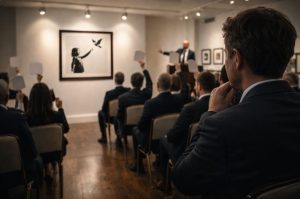 Does Revealing Who Banksy Is Affect the Value of His ArtRevealing Banksy’s identity may increase public interest, but it does not necessarily reduce the long-term value of his work.
Market Observations
- Auction houses such as Sotheby’s and Christie’s continue to report strong sales
- Media attention often drives short-term price increases
- Collectors prioritise authenticity and rarity over identity
Real-Life Example
Consider a UK-based art collector in 2026 evaluating whether to purchase a Banksy print.
Initial concern:
- “If the mystery is gone, will the value drop?”
Actual market behaviour:
- Increased visibility leads to renewed demand
- Verified works maintain or grow in value
- The story behind the artwork becomes even richer
What Is Confirmed, Theorised, and Misunderstood About Banksy?
Understanding Banksy requires separating verified facts from supported theories and widespread misinformation.
Confirmed Facts
- Banksy originated from Bristol’s street art scene
- His work uses stencil-based graffiti techniques
- Pest Control Office authenticates his artwork
Supported Theories
- Identity linked to Robin Gunningham
- Possible collaboration with other artists
Misinformation
- Claims that Banksy is an AI-generated artist
- Claims that Banksy is a corporate marketing team
- Viral social media rumours without credible sources
Why Does Banksy’s Identity Matter to the Public?
Banksy’s identity matters because it influences how people interpret his art, its authenticity, and its cultural significance.
However, many experts argue that the focus should remain on:
- The political messages within the artwork
- The social issues being highlighted
- The global conversations sparked by his pieces
Conclusion
So, who is Banksy? The most comprehensive evidence available in 2026 points strongly towards Robin Gunningham.
Yet, the significance of Banksy extends far beyond a name. His work continues to challenge authority, provoke thought, and inspire global audiences.
Even if the mystery is largely resolved, the Banksy persona remains powerful not because of who he is, but because of what his art represents.
FAQs About Banksy
Is Banksy’s real name Robin Gunningham?
Yes, according to 2026 forensic reports and historical records, Robin Gunningham is widely accepted as Banksy, though not officially confirmed.
Did Banksy ever publicly confirm his identity?
No, Banksy has never confirmed his identity. All conclusions are based on investigative findings.
Is Robert Del Naja Banksy?
He is strongly linked but is more likely a collaborator rather than the primary artist.
Why does Banksy remain anonymous?
To avoid legal consequences, maintain creative freedom, and preserve the value of his work.
Where did Banksy start his career?
Banksy is believed to have started in Bristol’s graffiti scene.
How are Banksy artworks authenticated?
Through Pest Control Office, which verifies authenticity without revealing identity.
Does Banksy work alone?
Evidence suggests he may collaborate, but the core identity is linked to a single individual.