


The traditional medical model has long treated the mind and the body as two separate entities. If a patient has a broken hip, we fix the bone; if they have an infection, we administer antibiotics.
However, modern clinical research has shattered this binary approach, proving that the pathway to physical recovery is inextricably linked to a patient’s psychological state. This “mind-body” connection is never more apparent than during the vulnerable weeks following a major hospital discharge.
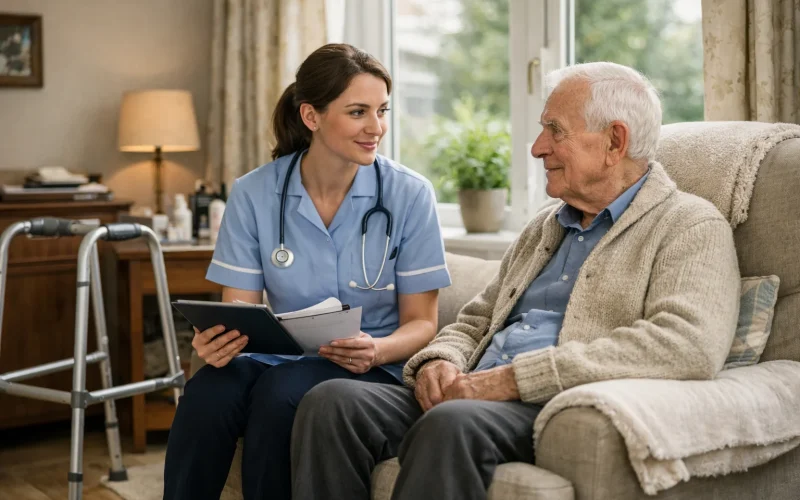
While hospitals excel at the “fix,” the “healing” often happens in the domestic sphere. This is where private nursing steps in, serving as a sophisticated bridge that manages not just the physical clinical needs, but the profound mental health challenges that accompany serious illness or injury.
The Biological Link Between Stress and Healing
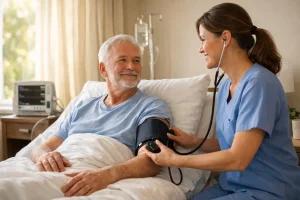
To understand why private nursing is so effective, one must understand the biology of recovery.
When a patient is stressed, anxious, or depressed common side effects of a sudden loss of independence the body produces high levels of cortisol. While cortisol is useful in a “fight or flight” scenario, chronically high levels inhibit the immune system and slow down tissue repair.
A patient who is terrified of falling, or who feels overwhelmed by a complex medication schedule, is in a constant state of physiological stress. By providing a professional, calming presence, a private nurse literally lowers the patient’s stress hormones.
This shift moves the body out of a state of “survival” and into a state of “rest and repair,” which is the only environment where true physical healing can occur.
The Nurse as a Psychological “Scaffold”
Post-operative depression and “ICU delirium” are well-documented phenomena. When a patient returns home, they often face a “reality crash” the moment they realize their life has changed, perhaps temporarily or perhaps forever.
Professional private nurses are trained to recognize the early warning signs of clinical depression and anxiety that family members might mistake for simple tiredness. Their role involves:
- Validation of the Struggle: A nurse provides a safe space for the patient to express frustration without the guilt of “burdening” a family member.
- The Power of Predictability: Anxiety thrives on uncertainty. By establishing a professional routine, a nurse provides a sense of control and predictability that anchors the patient’s mental state.
- Cognitive Reframing: When a patient says, “I’ll never walk again,” a nurse uses their clinical experience to reframe the thought: “You cannot walk today, but your milestones suggest you are on track for next month.”
Specialized Expertise: Navigating the Complexities of Home Care
The transition to home is particularly challenging in fast-paced urban environments where the pace of life doesn’t slow down for the recovering patient.
For those seeking high-standard home care London residents often turn to private nursing to ensure that the clinical environment of the hospital is seamlessly integrated into the comfort of their own residence.
In a city where medical excellence is expected, the differentiator is often the “soft skills” of the nursing staff. A specialized nurse knows that physical rehabilitation is 20% mechanics and 80% motivation.
They use their training to navigate the delicate ego of a patient who may feel diminished by their condition, helping them maintain their dignity while receiving necessary personal care.
Combating the “Isolation of Recovery”
One of the greatest threats to mental health during physical healing is social isolation. Even with family around, a patient can feel “othered” by their illness. They are the only ones in the room who can’t get up, the only ones in pain, and the only ones tethered to a machine.
A private nurse breaks this isolation by being a peer in the recovery process. Because they have seen hundreds of similar cases, they normalize the patient’s experience.
They provide a professional companionship that isn’t based on pity, but on a shared goal of improvement. This companionship is a powerful antidote to the loneliness that often derails a patient’s will to engage with their physical therapy.
The Benefits of a Holistic Approach
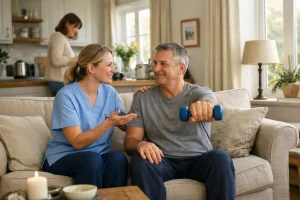
When mental health is prioritized alongside physical healing, the clinical outcomes are measurably better:
- Higher Compliance: A patient who feels mentally supported is more likely to stick to a difficult diet, take their medications on time, and push through painful exercises.
- Faster Wound Healing: Lower stress levels translate to better oxygenation of tissues and more efficient inflammatory responses.
- Sustainable Independence: By addressing the mental barriers to recovery, private nursing ensures that when the nurse eventually leaves, the patient has the confidence to continue their journey alone.
Healing the Whole Person
The intersection of mental health and physical healing is where the most successful recoveries happen. Private nursing is not merely an “extra pair of hands” to help with bandages and pills; it is a specialized service that protects the patient’s psyche during its most fragile state.
By treating the patient as a whole person not just a collection of symptoms, private nurses ensure that the bridge from the hospital to the home is built on a foundation of both clinical excellence and emotional resilience.
In the end, we don’t just want patients to be “fixed”; we want them to be whole, and that requires a professional hand that understands the deep connection between a healthy mind and a healing body.