





The Keir Starmer Jimmy Savile case has been widely debated in UK politics. Here is the verified CPS timeline, what the official reports say, and the facts behind the controversy.
At a Glance
- The CPS reviewed allegations against Jimmy Savile in 2009 but decided not to prosecute.
- Keir Starmer was Director of Public Prosecutions at the time, but official reports say he did not make the charging decision.
- The 2013 Alison Levitt QC review found the CPS had been “unjustifiably cautious” in its approach.
- After the report, Starmer apologised for the CPS’s shortcomings and reforms followed.
- The case later became a major political controversy, with repeated claims needing fact-checking.
Key Facts
- Keir Starmer served as Director of Public Prosecutions from 2008 to 2013.
- The CPS reviewed allegations against Jimmy Savile in 2009 but did not prosecute.
- An independent review in 2013 found prosecutors were “unjustifiably cautious”.
- The report confirmed Starmer was not the lawyer who made the charging decision.
- The case later became a major political controversy in the UK.
In February 2022, a tense exchange in the UK Parliament suddenly revived debate about a legal decision made more than a decade earlier. During political arguments, comments suggested that Keir Starmer had personally failed to prosecute Jimmy Savile when allegations were first examined.
The moment quickly went viral across news media and social platforms. Clips circulated widely, often without the wider legal context of how prosecution decisions are made inside the Crown Prosecution Service.
Two conflicting narratives emerged:
- One suggested Starmer had personally decided not to prosecute Savile.
- Another argued this interpretation misunderstood the structure of the CPS and the facts established in later investigations.
Because the issue involves victims of abuse, institutional responsibility, and political accountability, the facts matter. Misunderstanding the timeline risks distorting public debate and undermining confidence in legal institutions.
This guide provides a clear fact-checked timeline of the Keir Starmer Jimmy Savile case, based on official CPS documents, independent legal reviews, and verified reporting. It explains what happened between 2007 and 2013, who made the key decisions, and how the controversy later became a political flashpoint.
What Was Keir Starmer’s Role in the Jimmy Savile Case?
 Defining the Director of Public Prosecutions (DPP) Position
The Director of Public Prosecutions (DPP) leads the Crown Prosecution Service and oversees criminal prosecutions across England and Wales.
The role involves:
- Setting prosecution policy
- Supervising thousands of prosecutors
- Ensuring legal standards are followed
- Reviewing systemic issues in criminal cases
However, the DPP does not personally review or decide most individual cases.
Instead, decisions about whether to bring criminal charges are usually made by specialist CPS lawyers who assess evidence submitted by the police.
When Keir Starmer became Director of Public Prosecutions in 2008, the CPS was handling approximately 900,000 prosecutions every year. The organisation operates through regional teams, meaning most charging decisions occur well below the DPP level.
Understanding this structure is essential when analysing claims connected to the Keir Starmer Jimmy Savile case.
The 2009 Decision: Who Actually Made the Call?
In 2009, police submitted evidence to the CPS relating to allegations against Jimmy Savile.
A CPS lawyer reviewed the case file and concluded that a prosecution was unlikely to succeed in court.
The key reasons cited included:
- Limited evidence available at the time
- Concerns that witnesses might not testify
- Uncertainty about the reliability of testimony
As a result, the CPS decided not to pursue criminal charges.
Official reviews later confirmed that:
- The decision was made by a reviewing CPS lawyer
- The Director of Public Prosecutions was not personally involved in the decision
This distinction became central to later debates about responsibility.
How Did the CPS Handle the Jimmy Savile Allegations Between 2007 and 2013?
Initial Police Investigations and the 2009 Prosecution Failure
The earliest investigation that reached prosecutors occurred between 2007 and 2009.
Police received several complaints alleging sexual offences committed by Savile. After gathering statements and evidence, the case was submitted to the CPS for review.
At that time, prosecutors concluded there was insufficient evidence to meet the legal threshold for prosecution.
Under UK law, prosecutors must determine whether there is a “realistic prospect of conviction” before bringing charges.
In 2009, CPS lawyers believed the available evidence did not meet that threshold.
Importantly, the number of complaints then under review was relatively small. The later scale of allegations hundreds of victims was not yet known to investigators.
Post-Death Revelations and the 2012 Review
Jimmy Savile died in October 2011.
Soon afterwards, a series of media investigations and police inquiries revealed a far larger pattern of alleged abuse spanning several decades.
As new victims came forward, police began documenting hundreds of allegations involving institutions such as hospitals, schools, and broadcasting organisations.
By 2012, the scale of accusations had grown dramatically.
In response, Keir Starmer ordered an independent review into the CPS handling of the 2009 case to determine whether prosecutors had made mistakes.
The review was led by senior barrister Alison Levitt.
What Did the Alison Levitt QC Report Reveal About the Failed Prosecution?
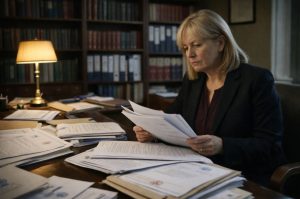 “Unjustifiably Cautious”: Why the Case Was Originally Dropped
The independent report, published in January 2013, examined both police and CPS actions during the original investigation.
The review concluded that prosecutors had taken an “unjustifiably cautious” approach to the case.
The report found that:
- Prosecutors were too hesitant about relying on witness testimony
- The possibility that multiple victims could support each other’s evidence was underestimated
- Greater investigative persistence might have strengthened the case
Levitt wrote:
This finding indicated
This finding suggested that while the CPS decision followed legal procedures at the time, prosecutors may have placed too much weight on perceived weaknesses in the evidence rather than exploring whether the case could be strengthened through further investigation.
The review also highlighted broader issues that were common in sexual offence cases during that period, including assumptions about how victims might behave and concerns about jury reactions.
Importantly, the Levitt report did not conclude that there had been deliberate wrongdoing, but rather that the prosecution decision had been overly cautious and that the case might have progressed if investigators and prosecutors had taken a different approach.
Did Keir Starmer Influence the Original 2009 Decision?
One of the most widely discussed questions surrounding the Keir Starmer Jimmy Savile case is whether Starmer personally influenced the decision not to prosecute.
The Levitt report addressed this directly.
It concluded that:
- Keir Starmer was not the reviewing lawyer in the case
- There was no evidence that he was involved in the 2009 decision-making process
- The decision was taken at a lower level within the CPS structure
As Director of Public Prosecutions, Starmer’s role was to oversee the organisation rather than personally examine individual case files unless they were escalated to his office.
However, after the scale of Savile’s alleged crimes became clear in 2012, Starmer took responsibility as head of the CPS for the institutional failure that had occurred.
How Did the Political Controversy About the Savile Case Begin?
The Boris Johnson “Slur” in Parliament
More than a decade after the original CPS decision, the case returned to public debate during a political exchange in 2022 involving Boris Johnson.
During remarks in Parliament, Johnson referred to accusations suggesting Starmer had failed to prosecute Jimmy Savile while serving as Director of Public Prosecutions.
The comments triggered significant criticism from across the political spectrum.
Many observers argued the remarks repeated a misleading narrative that ignored the findings of the 2013 independent review.
Several members of Parliament later urged Johnson to clarify or withdraw the claim.
The exchange drew widespread media attention and reignited public interest in the timeline of the Savile prosecution decision.
Expert Responses from Victims’ Lawyers and Former Prosecutors
Legal experts and lawyers representing victims of Savile responded publicly to the controversy.
Among them was Richard Scorer, who emphasised that Starmer had not been personally responsible for the original prosecution decision.
Scorer stated:
Former prosecutors also noted that the CPS operates through a structured decision making process where individual lawyers review evidence and apply the legal test for prosecution.
These responses highlighted the importance of distinguishing between institutional responsibility and personal involvement.
What Happened After the Savile Case Review?
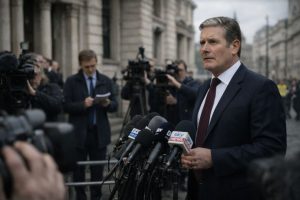 CPS Reforms and Starmer’s Apology
Following the publication of the Levitt report in 2013, the Crown Prosecution Service introduced several reforms designed to improve the handling of sexual offence cases.
These included:
- Greater emphasis on supporting victims during investigations
- Updated guidance on evaluating witness credibility
- Closer collaboration between prosecutors and police during evidence gathering
Keir Starmer issued a formal apology on behalf of the CPS, acknowledging that the organisation had failed victims in the Savile case.
He stated that the report revealed “shortcomings” in the way prosecutors had approached the evidence and committed the CPS to improving procedures.
The case became a catalyst for broader reforms in how sexual abuse allegations are assessed and prosecuted in England and Wales.
Key Events in the Keir Starmer Jimmy Savile Case
| Date | Event | Key Detail |
|---|---|---|
| November 2008 | Starmer becomes DPP | Keir Starmer appointed Director of Public Prosecutions |
| October 2009 | CPS declines prosecution | CPS lawyer determines there is insufficient evidence to charge Savile |
| October 2011 | Savile dies | Public revelations about widespread abuse begin to emerge |
| October 2012 | CPS review announced | Starmer orders independent investigation into prosecution failure |
| January 2013 | Levitt report published | Independent review criticises CPS approach as “unjustifiably cautious” |
| January 2013 | CPS apology | Starmer apologises for organisational shortcomings |
Confirmed Facts vs Misinformation About the Case
Understanding the Keir Starmer Jimmy Savile case requires separating confirmed evidence from political claims.
Confirmed Facts
- Keir Starmer was Director of Public Prosecutions between 2008 and 2013.
- The 2009 decision not to prosecute Savile was made by a CPS reviewing lawyer, not Starmer personally.
- After Savile’s death and the emergence of further allegations, Starmer commissioned an independent review.
- The Levitt report concluded prosecutors had been overly cautious but found no evidence that Starmer personally handled the case.
Proposed or Discussed Changes
- The CPS implemented reforms in the handling of sexual offence cases following the review.
- Greater focus has been placed on understanding the behaviour of victims and ensuring that cases are not dismissed prematurely.
Misinformation or False Claims
- Claims that Keir Starmer personally decided not to prosecute Jimmy Savile are not supported by the findings of the Levitt report.
- Assertions that the CPS deliberately protected Savile have not been supported by official investigations.
Real-World Example: Why Legal Thresholds Matter
To understand why the 2009 prosecution decision was controversial but legally complex, it helps to consider how prosecutors evaluate cases.
Imagine a situation where only a few witnesses report an alleged crime and prosecutors believe those witnesses may not appear in court. Under UK law, prosecutors must determine whether there is a realistic prospect of conviction.
If the available evidence is unlikely to convince a jury beyond reasonable doubt, prosecutors may decide not to proceed.
In the Savile case, the Levitt review suggested that prosecutors might have undervalued the strength of witness testimony and failed to recognise that multiple victims could support each other’s accounts.
This illustrates how legal decisions can later appear flawed when new evidence emerges.
Conclusion
The Keir Starmer Jimmy Savile case illustrates how complex legal decisions can become controversial years later when new evidence emerges.
The historical record shows that the failure to prosecute Savile in 2009 resulted from a combination of cautious prosecutorial judgment and limited evidence available at the time. While Keir Starmer led the Crown Prosecution Service during that period, independent investigations concluded that he did not personally make the decision not to charge Savile.
By commissioning the Levitt review and publicly apologising for the CPS’s shortcomings, Starmer acknowledged the institutional failure that allowed the case to be mishandled.
Understanding the difference between organisational responsibility and personal involvement is essential for anyone seeking the truth behind the political headlines surrounding the case.
FAQs About Keir Starmer Jimmy Savile Case
Did Keir Starmer personally fail to prosecute Jimmy Savile?
No. Official investigations found that Starmer was not the reviewing lawyer responsible for the 2009 prosecution decision. The decision was made by another CPS prosecutor.
Why was Jimmy Savile not prosecuted in 2009?
The CPS concluded that the available evidence did not meet the legal threshold required for a criminal prosecution, largely because prosecutors believed witnesses might not testify in court.
What was the Alison Levitt report?
The Levitt report was an independent review published in 2013 examining why the CPS decided not to prosecute Savile. It found prosecutors had been too cautious but did not implicate Starmer in the original decision.
When did the scale of Savile’s abuse become known?
Most allegations emerged after Savile’s death in 2011, when media investigations and police inquiries revealed hundreds of potential victims.
Did the CPS apologise for the failed prosecution?
Yes. In 2013, Keir Starmer apologised on behalf of the CPS for the organisation’s shortcomings identified in the Levitt report.
How many victims were identified in the Savile investigations?
Police later identified more than 450 alleged victims, far more than were known during the 2009 CPS review.
Did the Savile case lead to changes in prosecution policy?
Yes. The CPS introduced reforms aimed at improving the handling of sexual offence cases, particularly regarding how prosecutors assess victim testimony.