





The Abu Qatada Keir Starmer debate re-emerged during the 2025 general election campaign, following a televised leaders’ debate that drew widespread attention.
With national security at the forefront of public concern, the discussion turned personal as Prime Minister Rishi Sunak challenged Sir Keir Starmer’s past legal work involving radical cleric Abu Qatada.
The exchange took place on a Tuesday evening, just weeks before polling day, and has since sparked a national conversation about legal ethics, public duty, and political accountability.
According to verified coverage and legal frameworks, Starmer’s work as a human rights barrister was conducted under the principles of equal representation and professional obligation, yet it continues to be used as a point of political attack.
What readers should keep in mind:
- The legal representation in question occurred in 2008, long before Starmer entered politics
- The cab rank rule required barristers to act for clients regardless of public opinion
- Starmer later served as Director of Public Prosecutions, overseeing terrorism prosecutions
- The broader debate reflects tensions between justice, perception, and political messaging
This guide explores the background of the Abu Qatada case, explains why Keir Starmer’s role has been misunderstood by some, and examines what was actually said during the debate, providing readers with a clear, contextual understanding of the controversy.
Who Is Abu Qatada and Why Was He Labelled a Threat to the UK?

Abu Qatada, whose real name is Omar Othman, is a Palestinian Jordanian Islamist cleric who became one of the most controversial figures in Britain’s post nine eleven national security landscape.
After arriving in the UK in 1993, he was granted asylum and later emerged as a prominent preacher whose sermons attracted significant attention from intelligence agencies.
British authorities described Abu Qatada as a serious national security concern, with officials repeatedly arguing that he posed a risk due to alleged links with extremist networks.
Media coverage at the time referred to him as a leading ideological influence among jihadist groups in Europe, a description that significantly shaped public perception. The government pursued multiple legal attempts to deport him, citing intelligence assessments rather than criminal convictions within the UK.
Legal Status and Deportation Efforts
The prolonged effort to remove Abu Qatada from the UK became emblematic of the tension between security policy and human rights law.
Over more than a decade, he was detained in high-security prisons, placed under strict house arrest, and subjected to repeated court hearings.
Key developments included:
- Initial deportation attempts beginning in 2001
- Legal challenges based on the risk of evidence obtained through torture in Jordan
- Final deportation in 2013 under then Home Secretary Theresa May
Following his return to Jordan, Abu Qatada was acquitted of terrorism charges in 2014 when a Jordanian court ruled there was insufficient evidence to convict him.
This outcome reinforced the complexity of cases built on intelligence assessments rather than admissible courtroom evidence.
Why Did Keir Starmer Represent Abu Qatada in 2008?

The involvement of Keir Starmer in Abu Qatada’s legal case has been central to the current political debate. In 2008, Starmer acted as a defence barrister specialising in human rights law, representing Abu Qatada during one of several legal proceedings challenging his deportation.
At the time, Starmer was not a politician but a senior lawyer operating within established legal norms. His role was limited to representation in a specific hearing rather than long term advocacy or ideological support.
This distinction is often overlooked in political rhetoric but remains critical for understanding the case accurately.
Context of the Legal Representation
Barristers working in criminal and human rights law frequently represent clients accused of serious crimes. The purpose of such representation is to test the evidence, ensure due process, and uphold legal standards.
In Abu Qatada’s case, the legal argument focused on whether deportation would expose him to an unfair trial in Jordan. The courts examined concerns about the admissibility of evidence allegedly obtained under torture, a principle firmly embedded in both UK and international law.
Starmer’s involvement aligned with these legal concerns rather than any endorsement of the individual or his views. This distinction has been repeatedly emphasised by legal professionals and by Starmer himself in subsequent years.
What Is the Cab Rank Principle and Why Does It Matter Here?

The cab rank principle is one of the most important yet least understood foundations of the British legal profession. It requires barristers to accept cases within their expertise if they are available, regardless of the nature of the client or the allegations involved.
This rule exists to prevent discrimination and to ensure that even the most unpopular defendants receive representation. Without it, access to justice would depend on public opinion rather than legal rights.
How the Principle Applies in Practice?
Under the cab rank rule:
- Barristers cannot choose clients based on personal beliefs
- Legal representation does not imply agreement with a client’s actions
- The integrity of the justice system is preserved through equal access
Keir Starmer has repeatedly referenced this principle when responding to criticism. He has argued that the strength of the UK legal system lies in its ability to separate personal morality from professional duty.
This framework explains why defence lawyers often act in cases involving terrorism, serious violence, or organised crime without endorsing those acts.
Abu Qatada Keir Starmer – Was Starmer’s Defence Misunderstood by the Public?

The Abu Qatada Keir Starmer issue gained renewed attention during the ITV leaders debate when Rishi Sunak urged viewers to search Starmer’s legal history.
The framing suggested a direct association with extremism, a claim that many legal experts consider misleading without proper context.
Public misunderstanding often arises when legal representation is conflated with personal support. This simplification ignores the structural role lawyers play within the justice system and risks undermining public trust in legal institutions.
How Political Messaging Shapes Perception?
Election debates reward brevity and impact rather than nuance. References to extremist figures can be powerful, even when the underlying facts are complex.
This dynamic can lead to:
- Oversimplified narratives about legal work
- Erosion of trust in professional ethics
- Confusion between legal duty and political ideology
The controversy highlights how easily historical legal cases can be repackaged to influence modern political debates, especially when voters lack detailed legal context.
What Was Said During the ITV Leaders Debate?
During the debate, Rishi Sunak questioned whether Keir Starmer could be trusted with national security, citing his past legal work.
Starmer responded by highlighting his tenure as Director of Public Prosecutions, during which he oversaw prosecutions involving terrorism, serious violence, and organised crime.
The exchange became one of the most replayed moments of the debate, with both leaders appealing to credibility and experience.
Key Claims Made on Stage
Sunak emphasised increased defence spending and questioned Labour’s security credentials. Starmer countered by referencing his direct involvement in prosecuting terrorism cases and managing national security issues from within the justice system.
The contrast between political attack and professional record formed the core tension of the debate, leaving voters to weigh legal principle against political framing.
How Has Keir Starmer Defended His National Security Record?
Keir Starmer’s defence rests on his record as Director of Public Prosecutions, a role he held for five years. During this period, he led the Crown Prosecution Service through some of the most complex criminal cases in modern UK history.
He has consistently argued that his experience prosecuting terrorists provides stronger evidence of his commitment to public safety than isolated references to earlier legal representation.
Record at the Crown Prosecution Service
| Area of Responsibility | Scope of Work |
| Terrorism prosecutions | Oversight of major national security cases |
| Serious crime | Murder, organised crime, drug trafficking |
| Legal reform | Modernisation of prosecutorial standards |
This record is frequently cited by Starmer as evidence that his professional life has been defined more by protecting the public than by defending controversial individuals.
What Role Did Hizb ut Tahrir Play in the Controversy?
Alongside Abu Qatada, Hizb ut Tahrir was mentioned during the debate. Starmer provided legal advice related to the group’s attempt to challenge a ban in Germany in 2008, during his time as head of the CPS.
Hizb ut Tahrir has since been proscribed under UK terrorism legislation. At the time of the legal advice, however, the issue concerned international legal procedures rather than domestic endorsement.
Legal Versus Political Context
Providing legal advice does not equate to political alignment. In this case, the advice related to human rights law and procedural fairness, principles that apply regardless of the organisation involved.
This distinction mirrors the Abu Qatada case and reinforces the broader argument that legal roles cannot be equated with ideological support.
Does Representing Controversial Clients Reflect Personal Beliefs?
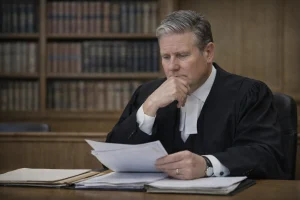
One of the most enduring questions raised by the Abu Qatada Keir Starmer controversy is whether lawyers should be judged by the clients they represent. Within the UK legal system, the answer has traditionally been no.
Starmer has compared legal duty to medical ethics, arguing that a doctor’s responsibility to treat patients does not imply agreement with their actions or beliefs.
Why This Principle Matters for Democracy?
If lawyers were penalised for representing unpopular clients:
- Defendants could be denied fair trials
- Legal outcomes would reflect politics rather than law
- Public confidence in justice would weaken
The controversy therefore extends beyond one individual and touches on the foundations of legal fairness in a democratic society.
Conclusion
The Abu Qatada Keir Starmer controversy illustrates how easily legal history can be reframed in political debates. While references to extremist figures carry emotional weight, they do not automatically reflect personal belief or political intent.
This guide has focused on verified information from trusted UK reporting and legal principles that underpin the justice system.
As the 2025 general election continues, voters are increasingly exposed to arguments that blur the line between legal duty and political judgment. Understanding that distinction is essential for evaluating claims about national security and leadership.
With further debates and scrutiny ahead, this issue is likely to remain part of the wider conversation about trust, experience, and the responsibilities of public office in modern Britain.
Frequently Asked Questions
Was Keir Starmer Abu Qatada’s personal lawyer?
No. He represented Abu Qatada in a specific legal hearing as part of his work as a defence barrister.
Did Starmer support Abu Qatada’s views?
There is no evidence to suggest that legal representation reflected personal or ideological support.
Why was Abu Qatada not convicted in the UK?
The UK relied heavily on intelligence assessments rather than admissible courtroom evidence.
What happened to Abu Qatada after deportation?
He was deported to Jordan in 2013 and later acquitted of terrorism charges in 2014.
Is it unusual for lawyers to represent extremists?
No. Defence lawyers regularly represent clients accused of serious crimes under professional duty.
What is the cab rank principle in simple terms?
It requires barristers to accept cases they are qualified for if available, regardless of the client.
Does this controversy affect Starmer’s national security credentials?
That judgment depends on whether voters prioritise legal principles or political framing when assessing leadership.