



UK Fuel Duty Briefing: What Drivers Need to Know
Fuel duty remains one of the most significant taxes affecting everyday driving costs in the United Kingdom.
Since March 2022, motorists have benefited from a temporary 5p-per-litre reduction introduced during the energy crisis.
However, government fiscal plans suggest that this relief may not last indefinitely.
As of 2026, the UK Treasury is expected to review the policy and potentially begin a gradual return to the previous fuel duty rate starting in September 2026. For millions of drivers, this could mean small but noticeable increases in petrol and diesel prices over the following months.
Current Fuel Duty Situation
- Temporary Reduction: 5p-per-litre cut introduced to help drivers during the cost-of-living crisis.
- Current Rate: Approximately 52.95p per litre for petrol and diesel after the reduction.
- Government Position: The reduced rate is expected to remain until late summer 2026.
- Next Policy Review: Decisions may be finalised ahead of the Autumn Budget.
Projected Timeline for Fuel Duty Changes
If current proposals proceed, the government is likely to restore the previous duty rate gradually rather than introducing a sudden increase.
This phased approach is intended to reduce financial shocks for motorists and businesses that rely on road transport.
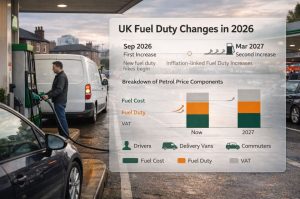
- September 2026: First potential increase of around 1p per litre.
- December 2026: Additional increase expected as part of the phased withdrawal.
- March 2027: Duty rate could return to roughly 57.95p per litre.
Why Fuel Duty Policy Matters?
Fuel duty directly affects the price drivers pay at petrol stations across the UK. Combined with VAT, the tax can account for more than half of the pump price. Changes to this policy therefore have a ripple effect on household budgets, delivery costs, commuting expenses, and the operating costs of thousands of small businesses. Motoring groups such as the RAC and the AA have warned that global oil market volatility
could also influence fuel prices, meaning drivers may face rising costs even before any duty increases are introduced.
Even a small increase in fuel duty can add noticeable costs over time, particularly for commuters, delivery drivers, and tradespeople who rely heavily on their vehicles.
With the cost of living still affecting households across the UK, petrol and diesel prices remain a major concern for drivers. Motorists, delivery companies, and small businesses in London are all asking the same question: is fuel duty going up in 2026?
The short answer is yes. The UK government is expected to begin phasing out the temporary 5p-per-litre fuel duty cut from 1 September 2026, with further increases scheduled until March 2027.
This temporary reduction was first introduced in March 2022 to help drivers during the global energy crisis and rising inflation. However, fiscal plans suggest the government intends to gradually restore the previous duty rate of 57.95p per litre.
Understanding the timeline is important for motorists, commuters, and businesses that depend on vehicles.
What Is Fuel Duty and Why Does It Matter for UK Drivers?
 Fuel duty is a tax charged by the UK government on petrol and diesel sold at fuel stations. It is applied per litre of fuel, and it forms a major part of the final price drivers pay at the pump.
Currently, UK fuel prices include:
- Fuel duty per litre
- 20% VAT applied on top of the total price
- Wholesale fuel costs and retailer margins
Together, fuel duty and VAT can make up over half of the price drivers pay for petrol or diesel.
Because the tax applies to every litre sold, even small changes in fuel duty can affect household budgets and business costs.
Why Was the 5p Fuel Duty Cut Introduced in 2022?
The government introduced the 5p fuel duty cut in March 2022 during a period of rising global oil prices and economic uncertainty.
At the time, petrol prices reached record levels due to:
- global energy market disruptions
- geopolitical tensions
- supply chain challenges following the pandemic
The reduction was intended to provide temporary financial relief to motorists and businesses struggling with high transport costs.
Although initially planned as a short-term measure, the reduction has been extended multiple times, meaning drivers have benefited from the lower rate for several years.
When Will Fuel Duty Start Increasing Again?
Fuel duty increases are expected to begin in September 2026 as the government gradually removes the temporary subsidy.
Rather than a single large increase, the policy proposes a phased return to the previous duty rate.
This staged approach is designed to:
- reduce sudden price shocks for motorists
- allow households and businesses time to adjust
- maintain stability in the fuel market
What Is the Full Timeline for the 2026 Fuel Duty Increase?
 The planned increases are expected to occur in three stages.
Phase 1: September 2026 (The 1p Increase)
The first stage will begin on 1 September 2026, when the fuel duty rate is expected to rise by 1p per litre.
Although the increase is small, drivers filling a typical family car could see fuel costs rise slightly with each refill.
Phase 2: December 2026 (The 2p Increase)
The second stage will take effect on 1 December 2026, adding 2p per litre to the duty rate.
Winter often brings higher travel demand, meaning many households may notice this increase during the colder months.
Phase 3: March 2027 (Restoring the 57.95p Rate)
The final phase is expected on 1 March 2027, when the remaining 2p increase restores the duty rate to approximately 57.95p per litre, the level before the 2022 reduction.
What Will the Fuel Duty Rate Be After Each Increase?
| Date | Change per Litre | Estimated Duty Rate |
|---|---|---|
| Current (Before Sept 2026) | No Change (5p Cut Maintained) | 52.95p |
| 1 September 2026 | +1p | 53.95p |
| 1 December 2026 | +2p | 55.95p |
| 1 March 2027 | +2p | 57.95p |
Why Is the Government Ending the Fuel Duty Cut Now?
The government faces a balance between supporting motorists and maintaining public finances.
Fuel duty generates billions of pounds each year that fund transport infrastructure and public services.
While the temporary reduction helped during the cost-of-living crisis, long-term fiscal plans indicate the tax must eventually return to its original level.
What Are Motoring Organisations Saying About the Fuel Duty Increase?

Motoring organisations have responded cautiously to the proposed fuel duty increases.
Simon Williams, Head of Policy at the RAC, said that while the continued freeze offers some short-term relief for drivers, the benefit may not last long.
“This relief will be very short-lived once the phased increases begin in September 2026.”
— Simon Williams, Head of Policy, RAC
Meanwhile, Edmund King, President of the AA, emphasised that fuel prices are also influenced by global energy markets rather than tax policy alone.
“International tensions affecting oil supply will inevitably lead to price hikes.”
— Edmund King, President, AA
These warnings suggest motorists could face rising petrol and diesel prices even before the planned fuel duty increases take effect.
Why Are Campaign Groups Opposing the Fuel Duty Increase?
Some campaign organisations argue that UK drivers already pay some of the highest fuel taxes in Europe.
Howard Cox, founder of FairFuelUK, has repeatedly urged the government to reconsider further increases. He argues diesel fuel is already heavily taxed and has called for major reforms to the fuel taxation system.
Cox has even suggested that the government should remove VAT from fuel duty to reduce the financial burden on motorists.
How Does UK Fuel Duty Compare With Other European Countries?
Fuel tax levels vary across Europe, but the UK has historically ranked among the highest.
John O’Connell, Chief Executive of the TaxPayers’ Alliance, has warned that the planned changes could keep Britain near the top of European fuel tax rankings.
“The UK could have the eighth highest duty on petrol and the second highest duty on diesel in Europe.”
— John O’Connell, Chief Executive, TaxPayers’ Alliance
This comparison often fuels debate over whether UK motorists pay too much tax relative to other European countries.
How Will the Fuel Duty Increase Affect London Drivers?
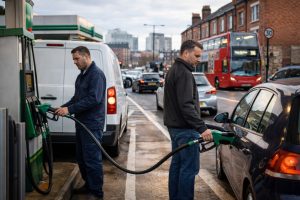 Fuel duty changes may affect different groups in different ways, particularly in a city as large as London.
Drivers commuting into the capital from surrounding areas may see gradual increases in weekly fuel spending.
For small businesses that rely heavily on vehicles such as delivery companies, tradespeople, and taxi drivers even minor increases in fuel costs can add up over time.
A local tradesperson who drives hundreds of miles each week, for example, could see noticeable increases in annual fuel expenses once the full duty rate returns.
What Can Drivers Do to Reduce Fuel Costs Before the Increase?
While fuel duty changes are outside a driver’s control, there are several ways to reduce fuel spending.
Best Fuel Tracking Apps in the UK
Price comparison apps allow drivers to find the cheapest petrol stations nearby. In some areas, fuel prices can vary by up to 10p per litre.
Efficient Driving Tips for City Traffic
Drivers can improve fuel efficiency by:
- maintaining steady speeds
- avoiding harsh acceleration
- keeping tyres properly inflated
These simple habits can improve fuel economy and reduce overall fuel consumption.
Considering the Switch to Electric?
Some motorists are exploring hybrid or electric vehicles as an alternative.
In cities like London, environmental initiatives such as the ULEZ scheme encourage cleaner vehicles, though switching cars requires careful financial consideration.
Conclusion
The temporary 5p fuel duty cut introduced during the cost-of-living crisis is expected to end gradually between September 2026 and March 2027.
While the phased approach spreads the increases over several months, drivers may still notice gradual changes in fuel costs over time.
Understanding the timeline allows households, commuters, and businesses to prepare for future fuel expenses and adjust their budgets accordingly.
FAQs About Fuel Duty Increase 2026
Will the 5p fuel duty cut be extended again?
As of early 2026, there are no confirmed plans to extend the cut beyond August 2026, though future decisions may depend on economic conditions.
Does fuel duty apply to both petrol and diesel?
Yes. The duty rate applies to both petrol and diesel sold in the UK.
How much of petrol prices are taxes?
Fuel duty combined with VAT can represent more than 50% of the total pump price.
Why has fuel duty been frozen so often?
Governments frequently freeze fuel duty increases to help households during periods of economic pressure.
Will electric vehicles replace fuel duty taxes?
Electric vehicles do not pay fuel duty, but governments may introduce new road taxes in the future to replace lost revenue.
Can global oil prices affect petrol costs more than fuel duty?
Yes. Oil market fluctuations often have a larger effect on pump prices than small tax changes.
Could the government cancel the fuel duty increase?
Policy decisions can change, particularly during budget announcements, but no confirmed extension has been announced yet.