





Strong accounting revision starts with learning the core ideas that shape the subject. When you understand why entries move, how figures link and what each statement shows, you build a clear base for every topic that follows.
Good revision also depends on using the right tools in the right order so you strengthen knowledge step by step. Stay until the end to see how each method supports steady and confident progress in your accounting exam preparation.
How to Study Core Principles in Accounting?

You should begin your revision by learning the purpose of accounting, since this shows why accurate records matter. The accounting equation comes next because it helps you see how assets, liabilities, and equity stay balanced in every transaction.
Once you understand this, you can follow double entry with far greater accuracy. This also prepares you for adjustments such as depreciation, accruals and prepayments since all of them rely on the same basic logic.
You can build this early foundation by using Accounting revision resources since they explain these principles in small, easy steps, and Save My Exams supports this through structured topic notes written by experienced teachers.
Revision Notes
Once you understand the foundations, you should move to revision notes. Notes help you organise topics and rewrite them in clear terms so you understand the meaning behind each principle.
This is useful when studying journals, ledgers, trial balances or financial statements since each topic contains new terms that link back to earlier learning.
Short notes also help you revise faster because you can return to the key ideas without reading long sections of text. This supports long-term study, especially when exam boards expect precise definitions and well-linked explanations.
Flashcards
After building your notes, you should strengthen your recall with flashcards. Accounting relies on clear memory of formulas, definitions and statement layouts, so flashcards help you review these quickly. You can use them for items like:
- Accruals
- Capital
- Inventory
- Gross profit margin
- Return on capital employed.
Regular review builds confidence because the cards push you to recall information without looking at notes. This prepares you for exam conditions where speed and accuracy are important.
Exam Questions
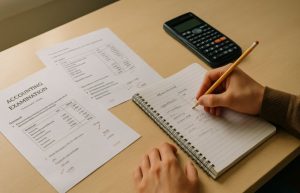
Once you can recall the core ideas, you should start applying them through exam questions. Practice questions show you how principles work in real scenarios, and this improves your ability to read tasks carefully.
When you attempt questions on adjustments, error correction or financial statements, you learn how to follow steps in the right order.
Exam questions also reveal weak areas early. This lets you return to your notes or flashcards so you fix misunderstandings before moving on to harder tasks.
Past Papers and Mark Schemes
When you’ve built confidence through practice questions, you should attempt past papers. Past papers help you work under timed conditions so you learn how to manage exam pressure.
They also show you the type of layout and wording examiners use, which helps you plan answers more effectively. You should always check your work with mark schemes because they show you exactly how marks are awarded.
When you compare your answers with the scheme, you see whether your explanations are clear and whether your calculations follow the correct logic. This improves your exam technique and helps you understand what examiners expect you to show.
Wrapping Up
Good accounting revision follows a clear order that builds knowledge gradually. When you learn the core principles first, then use notes, flashcards, exam questions and past papers in a structured routine, you develop the knowledge, accuracy and confidence needed for top marks in the exam.